If you suspect the serpentine belt has broken, stop driving as soon as you can safely do so and turn the engine off. A broken belt can stop the alternator and, on many vehicles, the water pump. That means the battery may stop charging and the engine can overheat quickly. Some vehicles may also lose power-steering assist, making the wheel much harder to turn at low speed. Continuing to drive can turn a belt problem into an overheating or engine-damage situation.
Immediate action: Signal, move to the safest available location, stop, switch off the engine, and arrange help. Do not restart the vehicle repeatedly to “see if it clears.”
Fast triage: signs the serpentine belt may be failing or gone
The serpentine belt is the long external belt that drives multiple accessories from the engine. Its exact job varies by vehicle, so symptoms can differ. A broken belt is often sudden; a failing belt may give warnings first.
- Battery or charging warning light: The alternator may no longer be charging the battery.
- Temperature gauge climbing or overheating warning: Many engines use the belt to run the water pump. This is a stop-now symptom.
- Suddenly heavy steering: Vehicles with belt-driven hydraulic power steering can become difficult to steer, especially in parking lots or turns. Some vehicles use electric steering, so this symptom is not universal.
- Loud squealing, chirping, flapping, or a sharp slapping sound: A slipping, loose, wet, damaged, or misaligned belt can make noise before it fails.
- Burning-rubber smell or visible belt debris: A belt may be overheating, shredding, or rubbing against another component.
- Air conditioning stops cooling: On some vehicles, the belt drives the A/C compressor. This symptom alone does not prove the belt is broken, but it matters when paired with warning lights or noise.
In West Palm Beach heat, treat a rising temperature gauge with extra urgency. If the water pump is belt-driven, engine temperature can climb rapidly after belt failure. A brief South Florida rainstorm can also make a worn belt squeal or slip; if the sound persists after the rain or appears with a warning light, do not assume it is harmless.
Do / don't: what protects the vehicle and what makes the problem worse
| Do | Don't |
|---|---|
| Pull over promptly if the battery light and temperature warning appear together. | Do not keep driving just because the engine still runs. |
| Turn off the engine once safely stopped. | Do not repeatedly restart the engine to test it. |
| Use hazard flashers if stopped where other drivers need warning. | Do not stand near moving traffic or work under the vehicle roadside. |
| Let the engine cool before looking under the hood. | Do not remove a hot radiator cap or touch hot engine components. |
| Request a tow if the belt is missing, shredded, or accompanied by overheating. | Do not install a new belt without knowing why the old one came off or failed. |
| Tell the dispatcher about warning lights, overheating, and steering changes. | Do not rely on a battery jump as a solution to a failed alternator belt drive. |
What to do, in order, after the warning signs start
- Reduce the load and get safely out of traffic. If the engine is still running and you need a short distance to reach a safer stopping point, avoid sharp steering inputs and watch the temperature gauge continuously. Turn off the A/C if practical, but do not interpret that as a repair. Your goal is only a safe stop.
- Stop immediately for overheating. If the temperature gauge rises above normal, a temperature warning appears, steam is visible, or you smell coolant, stop and shut off the engine. Do not attempt to drive to a shop.
- Shut the engine off and set the vehicle up safely. Put the vehicle in park, apply the parking brake, activate hazard flashers, and keep occupants away from traffic when conditions allow. If your location is unsafe, prioritize getting professional assistance rather than inspecting the vehicle.
- Wait before any visual check. After the engine cools, you may look through the engine bay without touching components. A missing belt, loose belt strands, black rubber dust, or an obviously shredded belt supports the diagnosis. Do not reach near pulleys, fans, or hot parts.
- Choose towing instead of a roadside improvisation when the cause is unknown. Belts can fail because of a seized pulley, failing tensioner, damaged pulley alignment, leaking fluid, or another mechanical issue. Replacing only the belt without addressing the cause can result in another immediate failure.
When towing is the right call
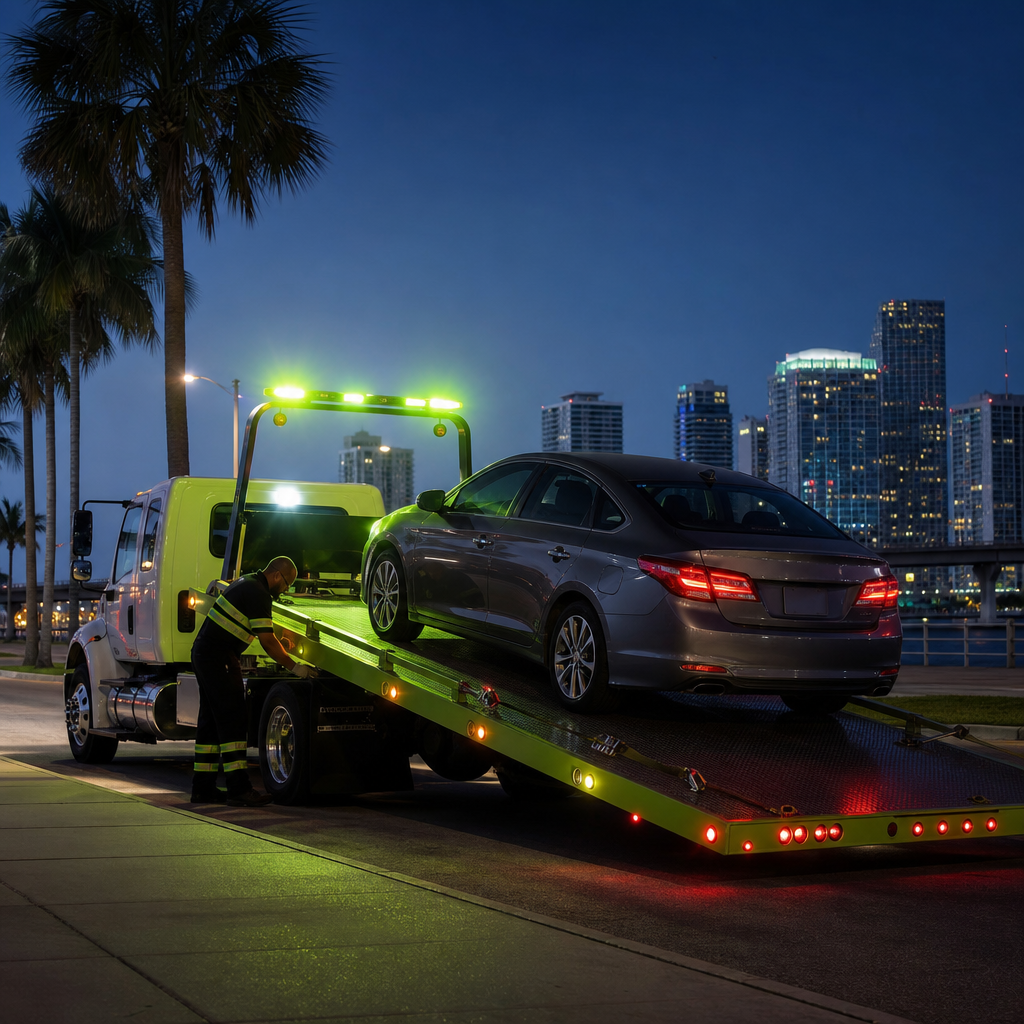
A tow is the sensible choice if the serpentine belt is broken, missing, shredded, or repeatedly slipping. It is also the right choice if the engine overheated, the battery warning light is on with other symptoms, steering assist changed suddenly, or you cannot confirm that the vehicle can be operated safely.
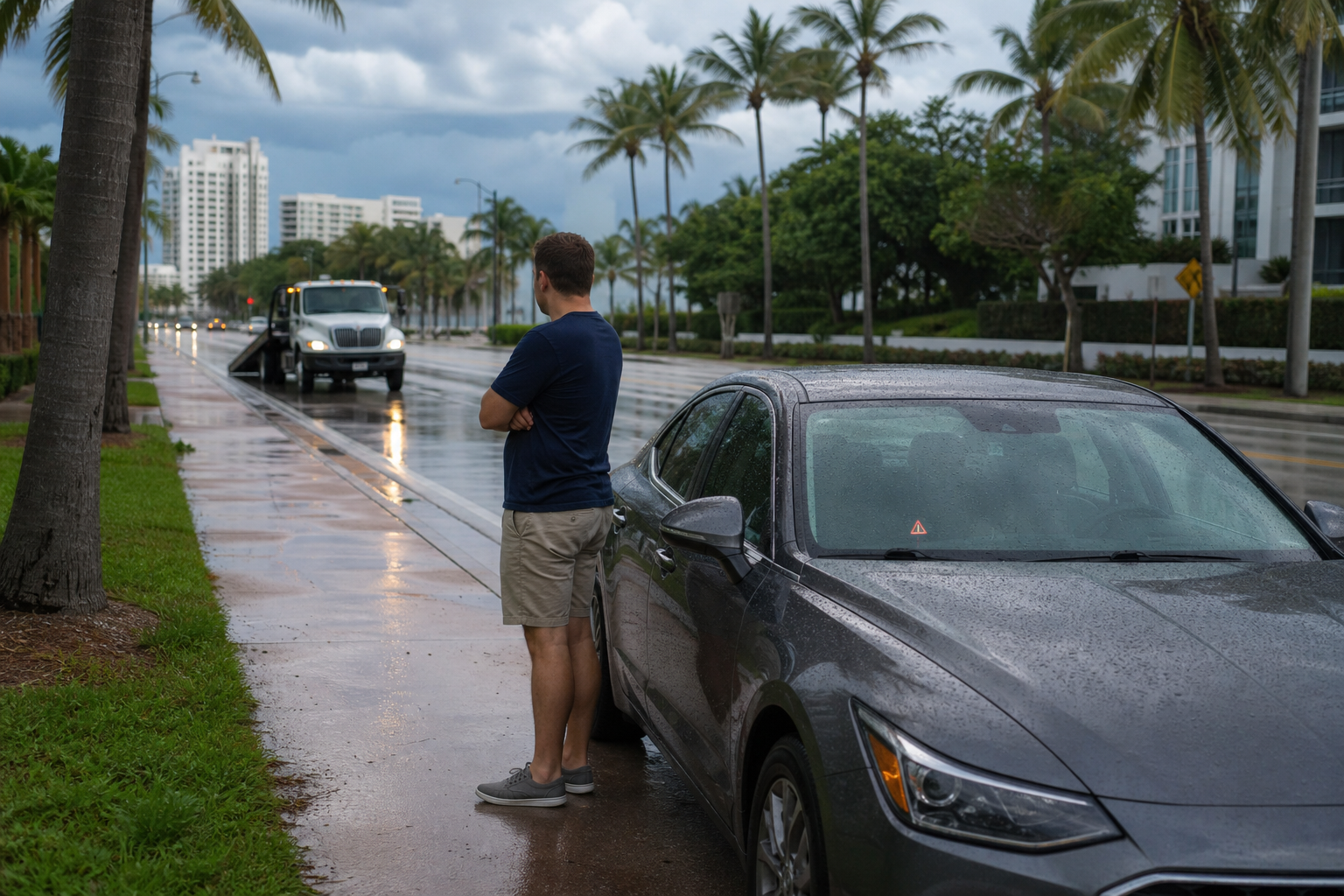
For a suspected belt failure in West Palm Beach or elsewhere in Palm Beach, Florida, a calm next step is to request 24-hour towing or emergency towing and explain that you may have a serpentine belt problem. Mention whether the vehicle overheated, whether the battery light came on, and whether the steering became heavy. If the issue is limited to a discharged battery with no belt symptoms or warning signs of overheating, jump-start service may be appropriate; a jump will not correct a belt-driven charging failure.
Quick roadside checklist before help arrives
- Vehicle location and a safe callback number
- Vehicle make, model, color, and approximate year if known
- Whether the engine is off and whether it overheated
- Dashboard warnings seen: battery, temperature, or both
- Whether steering became unusually difficult
- Any belt noise, smoke, steam, rubber smell, or visible debris
- Your preferred destination, such as home or a repair facility
Frequently asked questions
Can I drive with a broken serpentine belt for a few miles?
It is not a safe plan. The engine may continue running briefly on battery power, but charging can stop immediately. If the belt drives the water pump, overheating may follow quickly. Loss of steering assist can also make the vehicle difficult to control at low speeds.
Will a broken serpentine belt cause my brakes to fail?
A serpentine belt does not normally directly operate the braking system. However, a vehicle with heavy steering, overheating, or low electrical power is not safe to continue driving. Brake assist design varies by vehicle, so do not use normal brake feel as proof that the vehicle is safe to operate.
Why did the belt squeal before it broke?
Squealing can come from belt wear, incorrect tension, contamination from fluid, a worn tensioner, pulley misalignment, or a failing accessory pulley. Rain can briefly expose a marginal belt, but persistent squealing deserves inspection before the belt fails completely.
Can I replace the serpentine belt myself on the roadside?
Only if you already know the correct procedure and can safely confirm why the old belt failed. A belt that came off because a pulley seized or a tensioner failed can shred another replacement. Roadside conditions also add traffic and burn hazards. Towing is the safer handoff when the cause is uncertain.
Does the battery warning light always mean the battery is bad?
No. The battery light often means the charging system is not operating correctly. A broken or slipping serpentine belt can prevent the alternator from charging even when the battery itself was not the original problem.