Use this decision rule first: If your key fob will not unlock the door, try the vehicle's built-in mechanical key entry method once, then stop. If the key is inside, the mechanical key will not turn, or the vehicle still will not recognize the fob after a basic check, protect your location and arrange lockout or roadside help rather than forcing access.
A dead fob battery and a true vehicle lockout can look identical from outside: the doors stay locked, the handle does nothing, and the car will not start. The right next step depends on one detail: do you have a working physical key or an accessible key fob outside the vehicle? This guide is built for the minutes when you need a clear sequence, not a long list of theories.
Before the problem: set up one backup you can actually use
Smart-key convenience can hide the fact that many vehicles still have a manual entry process. Learn it before you need it. A few minutes now can prevent a roadside decision later.
- Find the emergency key: Many fobs contain a small metal key released by a latch, button, or sliding panel. Check the owner's manual for the exact release method.
- Locate the hidden key cylinder: On some vehicles, it is visible on the driver door. On others, it sits behind a removable handle cover. Do not pry at a cover unless the manual shows how it releases.
- Know the backup starting location: Some push-button-start vehicles can recognize a weak fob when it is held against a marked spot or placed in a specified console area. The location is model-specific.
- Keep your manufacturer app and roadside contacts current: App-based unlock features can help only if the account is already active, the vehicle has connectivity, and your phone has service and battery.
- Carry fob-battery information: Note the battery type used by your fob. Replacing it at home is calmer and safer than trying to improvise in a parking area.
Do not leave a spare fob loose inside the vehicle. It does not help during a lockout and may create an added security problem. If you use a spare, keep it in a secure location that remains available when the car is not.
At the roadside: identify the failure without damaging anything
1. Pause where you are and check the immediate risk
Stand clear of traffic and avoid repeatedly moving between doors on the traffic side. If the vehicle is in an active lane, has created a hazard, or you cannot remain safely beside it, move to a safer nearby location when possible and call for appropriate emergency assistance. For a non-hazard lockout, focus on access without damaging the door, glass, seals, or electronics.
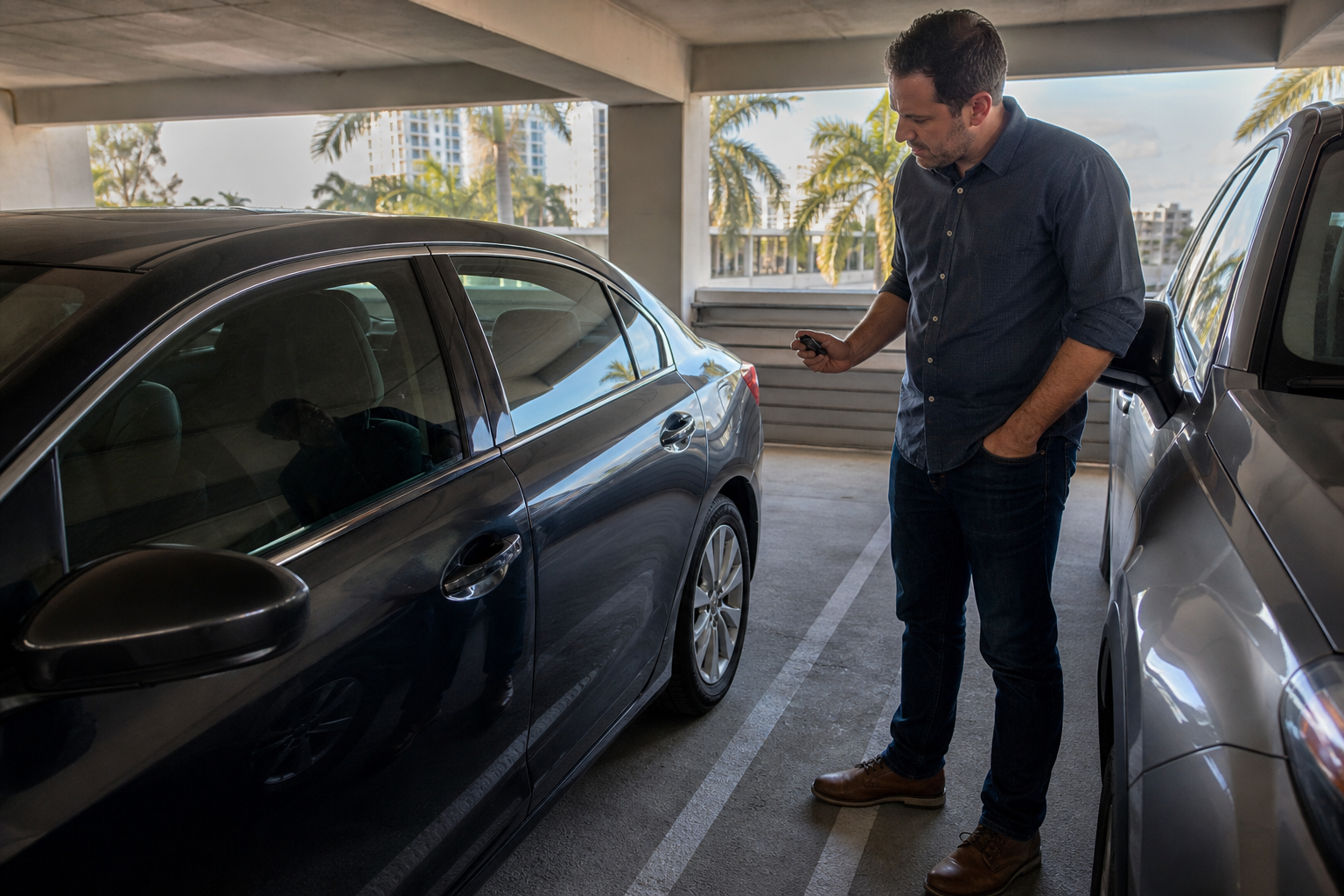
In a parking garage, pay attention to clearance and access. A service vehicle may need room to enter, turn, and work beside your car. If you call for help, be ready to provide the garage level, section, entrance instructions, and the vehicle's exact parking position. At an airport or other controlled-access parking area, follow facility procedures and share the lot or garage details with the dispatcher.
2. Separate a weak-fob problem from keys locked inside
Use these quick clues:
- You have the fob in hand, but no buttons work: A depleted fob battery, fob damage, or vehicle battery issue may be involved.
- The fob works only very close to the door: The fob battery may be weak. Use the mechanical key method or backup recognition procedure described by the vehicle manufacturer.
- You can see the keys through the window: Treat it as a lockout. Do not try to fish, hook, or force the keys through a door gap.
- The door opens with the mechanical key, but the car will not start: This is no longer only an access issue. Check the owner's manual for the emergency fob-recognition position. If the vehicle still will not recognize the fob, request roadside assistance and explain that the vehicle is accessible but will not start.
3. Make only safe, manufacturer-supported attempts
- Press unlock once while standing close to the driver door.
- Try the spare fob if one is genuinely available nearby.
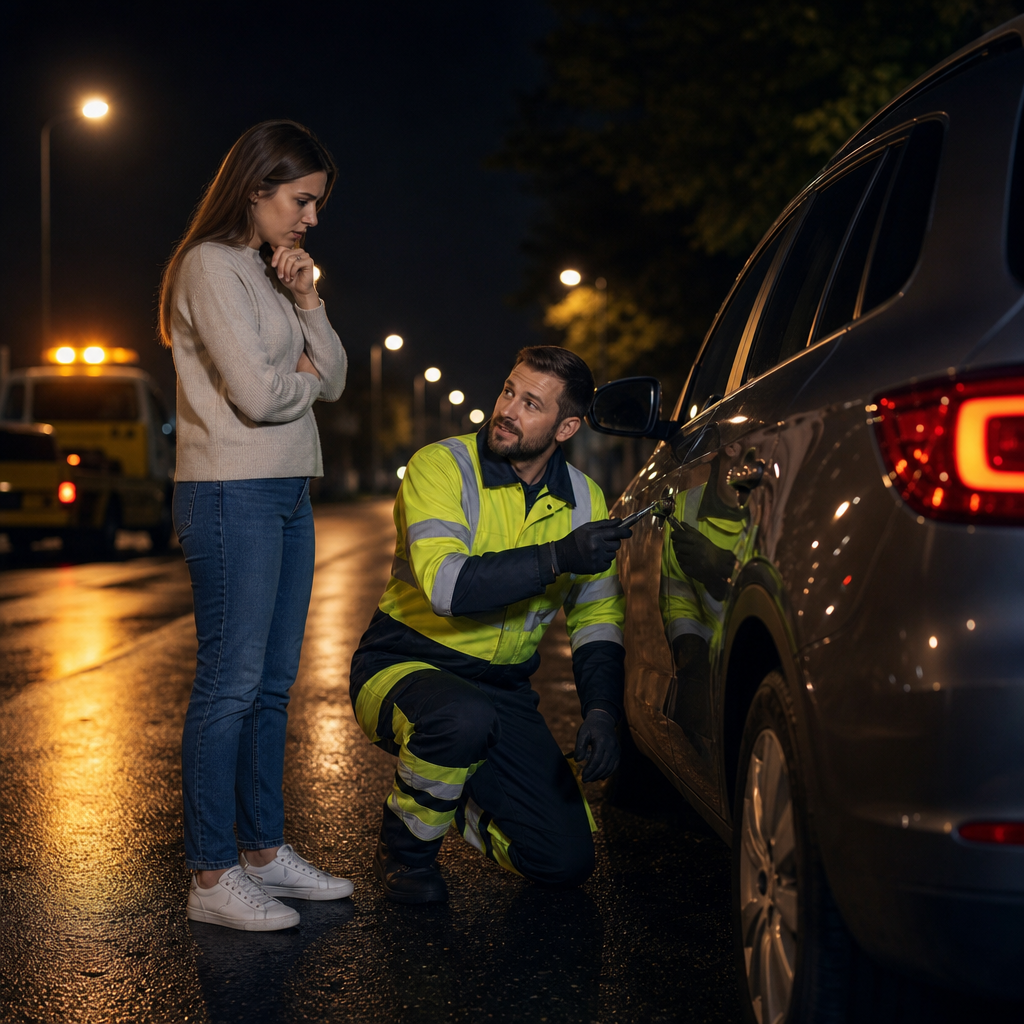
- Release the emergency metal key from the fob, if equipped.
- Use the key cylinder exactly as your manual describes.
- If the door opens, follow the manual's backup procedure for recognizing the fob before attempting to start the vehicle.
Stop if the key will not insert normally, will not turn with gentle pressure, or a door cover does not release as expected. Excess force can damage a lock cylinder, handle trim, weather seal, or window mechanism. Also skip internet tricks involving coat hangers, wedges, tape, strings, slim tools, or breaking glass. They can injure you, damage the vehicle, and turn a straightforward lockout into a more complicated service need.
While waiting: make the handoff easy and keep control of the situation
Once you have decided that self-entry is not appropriate, the useful work is preparation. A roadside provider can respond more effectively when the situation is described accurately.
Lockout and dead-fob checklist
- Vehicle year, make, model, and color
- Your exact location in West Palm Beach or elsewhere in Palm Beach County
- Garage level, parking zone, gate details, or other access restrictions, if applicable
- Whether the keys are inside, the fob is in hand, or the mechanical key is available
- Whether any door or trunk is already unlocked
- Whether the vehicle is safely parked or needs towing after access is restored
- Proof of authorization available for the vehicle, when requested
Keep your phone charged if possible, and stay in a visible, safe place near the vehicle. If you are in a garage, avoid waiting in a driving lane or behind another parked vehicle. Do not leave a child, pet, or vulnerable person inside a locked vehicle. If someone inside is in immediate danger, contact emergency services rather than waiting for routine lockout assistance.
If you suspect the vehicle battery is also weak—for example, the fob works but there are no interior lights or no response after entry—mention that during the call. You may need more than access. A provider can help determine whether a jump start service is the appropriate next roadside step or whether the vehicle should be moved by flatbed towing.
After service arrives: confirm the next problem before you leave
Getting the door open is not always the end of the event. Before the service vehicle leaves, take a minute to identify what failed and what you can safely do next.
- If the fob battery was the likely issue: Unlock and start the vehicle using the approved backup method, then replace the fob battery soon.
- If the fob was damaged or not recognized: Keep the vehicle secured and use the manufacturer's guidance for replacement or programming. Do not assume a new battery will solve water damage or an internal fob fault.
- If the vehicle battery appears discharged: Ask for the appropriate roadside option. If it cannot be started reliably, avoid repeated start attempts.
- If the key is inaccessible, broken, or the lock cylinder does not operate: Do not keep testing it. Decide between further roadside support and towing based on whether the vehicle can be safely secured and driven.
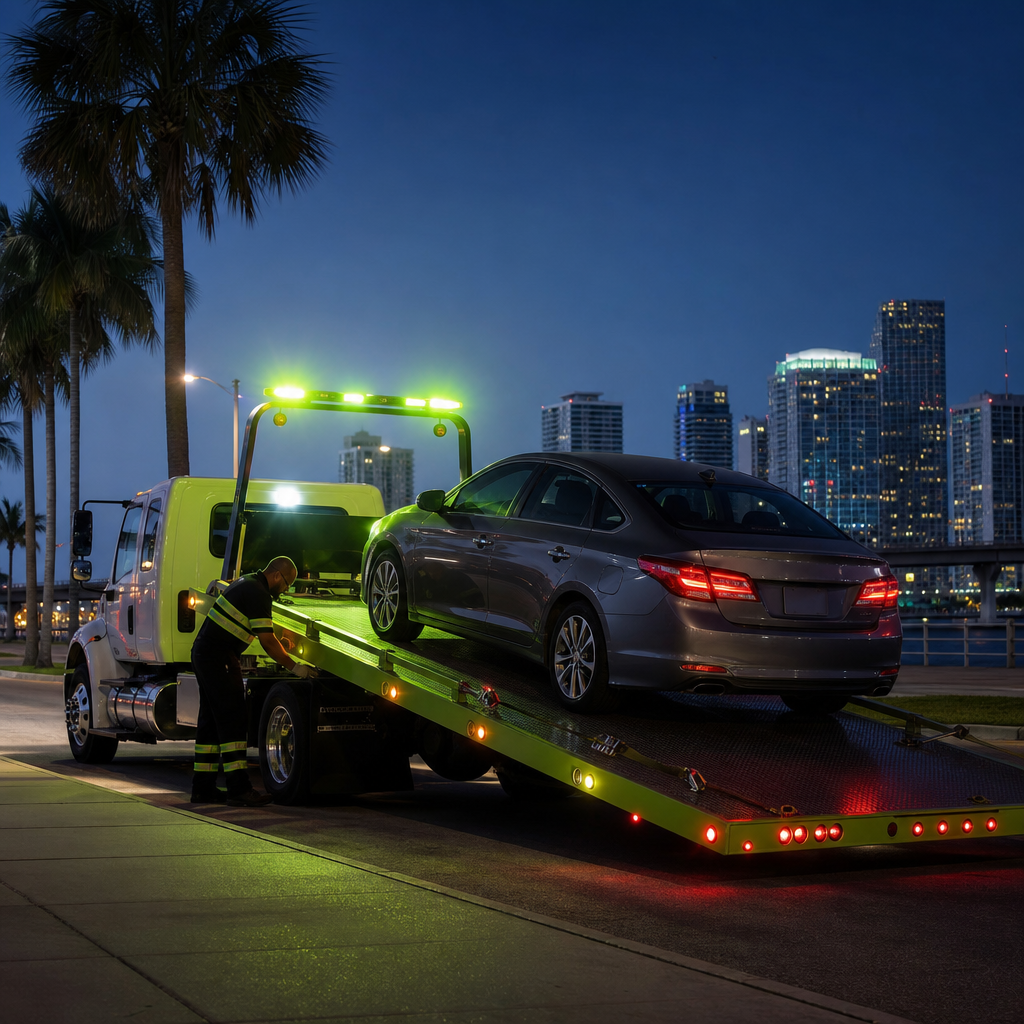
Decision-based next step: If you only need non-damaging entry and have a safe place to wait, request car lockout service. If you regain entry but the vehicle will not start or cannot be safely driven, request 24-hour towing or the roadside service that matches the actual problem.
Quick answers for a dead fob or lockout
Can I unlock my car with a dead key fob battery?
Often, yes. Many smart fobs contain an emergency metal key, and many vehicles have a manual driver-door key cylinder. The specific method varies by vehicle, so use the owner's manual rather than forcing a cover or lock.
Why did my car unlock but refuse to start?
The manual key may open the door without providing the electronic authorization needed to start the vehicle. Your vehicle may have a designated backup location for a weak or dead fob. Follow the manufacturer instructions for that location.
Should I replace the fob battery in a parking lot?
Only if you have the correct battery, a safe place to work, and know how your fob opens without damage. If the key is inside the vehicle or you are unsure how the fob comes apart, lockout help is usually the cleaner choice.
Can roadside assistance open any locked vehicle?
Access methods depend on the vehicle and the circumstances. Be prepared to confirm that you are authorized to access it. A provider can assess the safest available method without relying on damaging DIY techniques.
When should I choose towing instead of a lockout service?
Choose towing when the vehicle cannot be started after access is restored, cannot be safely secured, or has another issue that prevents safe driving. If the only issue is keys locked inside, lockout service is generally the more direct request.