Quick decision rule: If the temperature warning rises, steam appears, a tire loses air quickly, or the vehicle will not restart after sitting in the heat, stop trying to “make it home.” Get to the safest available spot, turn on hazard lights, and arrange roadside help or a tow before a small heat problem becomes a stranded-vehicle problem.
West Palm Beach heat can expose weak tires, aging batteries, and cooling-system faults with little warning. The roadside priority is not diagnosing every cause. It is protecting people, avoiding further vehicle damage, and giving a dispatcher enough accurate information to send the right help.
Heat breakdowns: do this, not that
| Situation | Do | Don’t |
|---|---|---|
| Temperature gauge climbing or warning light on | Turn off the A/C, reduce load, and pull over safely as soon as possible. | Keep driving to test whether the warning goes away. |
| Steam or a strong sweet smell from under the hood | Stop, shut the vehicle off, move away from traffic, and let it cool. | Open the radiator cap or add coolant to a hot engine. |
| Soft tire, blowout, or repeated low-pressure warning | Slow down gradually, avoid sharp steering, and stop on stable ground. | Drive far on a visibly flat tire or continue after a blowout. |
| Clicking, dim lights, or no start after parking in heat | Secure the vehicle and request a jump-start assessment if the location is safe. | Repeatedly crank the engine until the battery is fully drained. |
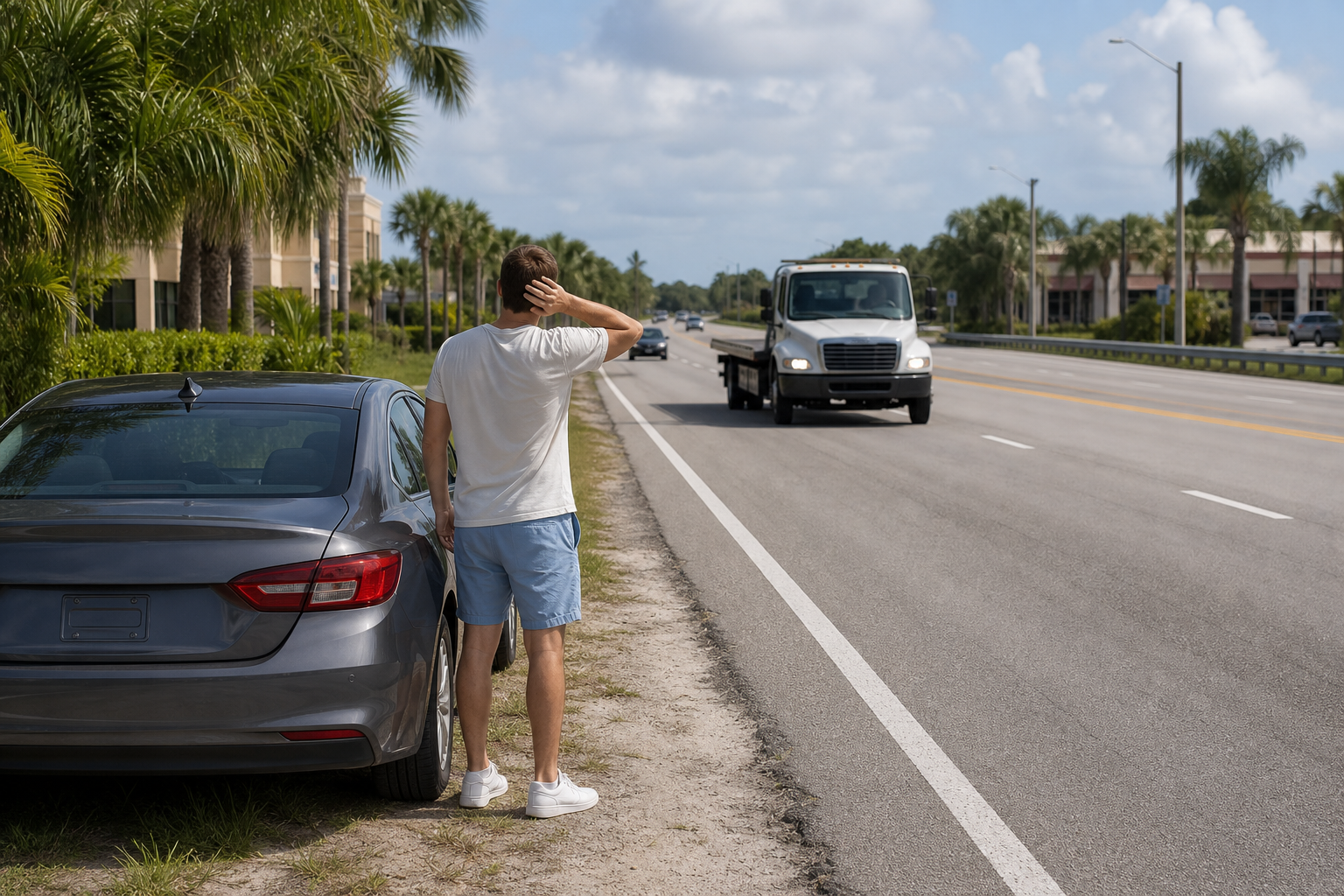
| Vehicle is stopped in an exposed or difficult-access area | Tell the dispatcher the exact location, direction of travel, vehicle position, and any access limits. | Assume a street name alone explains where the vehicle can be reached. |
Use this roadside sequence before heat makes the situation worse
1. Read the symptom, then choose safety over distance
A heat-related issue often announces itself through a dashboard warning, loss of A/C performance, an unusual smell, sluggish starting, vibration, or a tire-pressure alert. Treat visible steam, a red temperature warning, smoke, a tire that is visibly damaged, or a sudden loss of steering feel as stop-now signs.
If the car is still moving, ease off the accelerator, avoid hard braking, and steer toward the safest available place. Do not stop in an active travel lane unless the vehicle cannot move farther. Once stopped, place the transmission in park, apply the parking brake when appropriate, activate hazard lights, and have passengers exit only if they can do so away from traffic.
2. If the engine is overheating, close the hood and give it time
An overheating engine can be caused by low coolant, a leak, an airflow problem, or another cooling-system issue. Roadside drivers do not need to determine which one before requesting help. They do need to avoid burns and added engine damage.
- Turn off the A/C if the vehicle is still running and you are moving toward a safe stop.
- After stopping, turn the engine off if the temperature warning remains high, steam is visible, or the vehicle is running poorly.
- Do not open a hot radiator cap, coolant reservoir cap, or pressurized cooling-system component.
- Do not pour cold water onto a hot engine.
- Wait away from traffic and arrange a tow if there is steam, leaking fluid, repeated overheating, or uncertainty about safely driving farther.
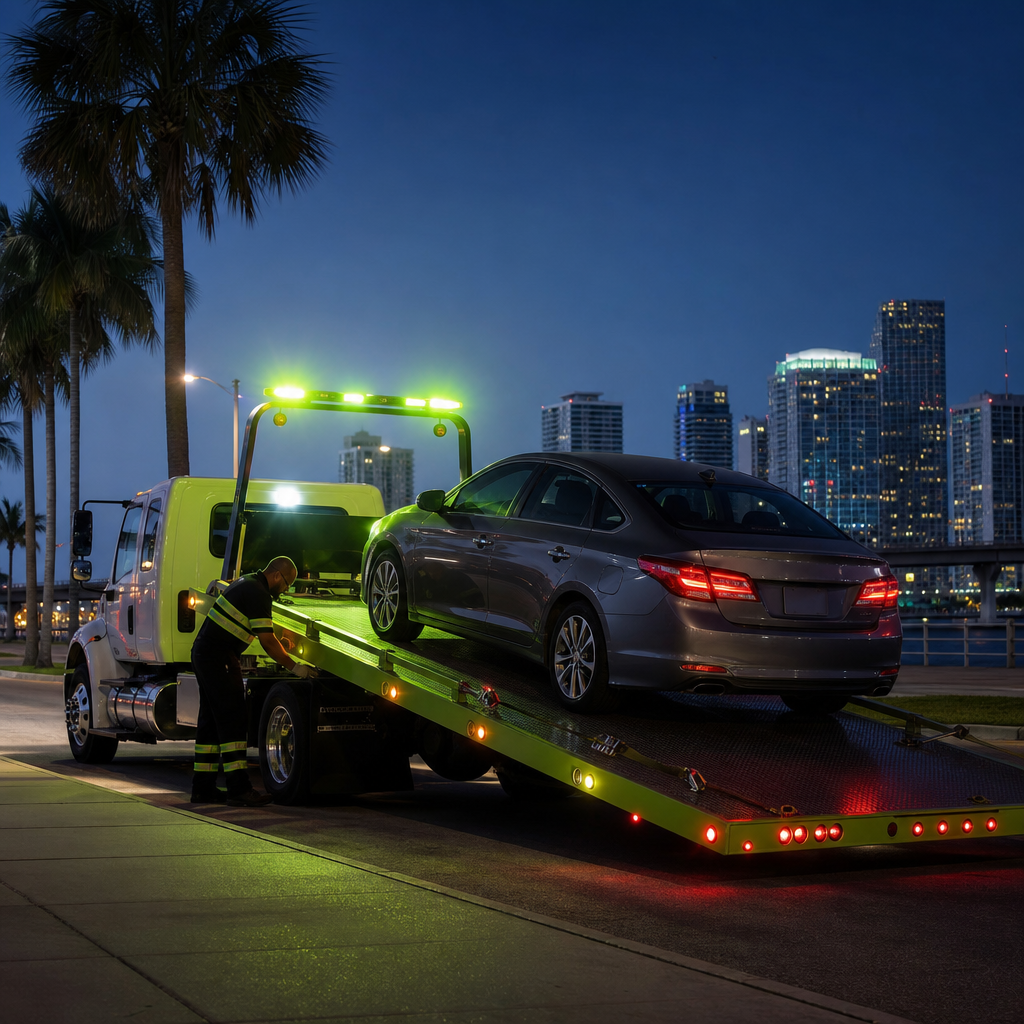
A cooling-system issue is usually a towing decision when the warning returns after a brief cool-down, fluid is visibly leaking, or the engine has already overheated. A flatbed tow keeps the vehicle off the road rather than asking the engine to handle another hot drive.
3. Treat tire heat as a control problem, not a speed problem
Hot pavement and high ambient temperatures can make an already weakened tire more vulnerable. A tire-pressure warning may reflect pressure changes, a puncture, or a slow leak. A thumping sound, pulling sensation, vibration, shredded tread, or sudden loss of air deserves a controlled stop.
Hold the wheel firmly, ease off the accelerator, and let the vehicle slow smoothly. Avoid sharp turns and sudden braking. Once you are stopped, look from a safe position. Do not put your body near traffic to inspect the tire closely, and do not continue driving on a tire that is visibly flat, damaged, or separating.
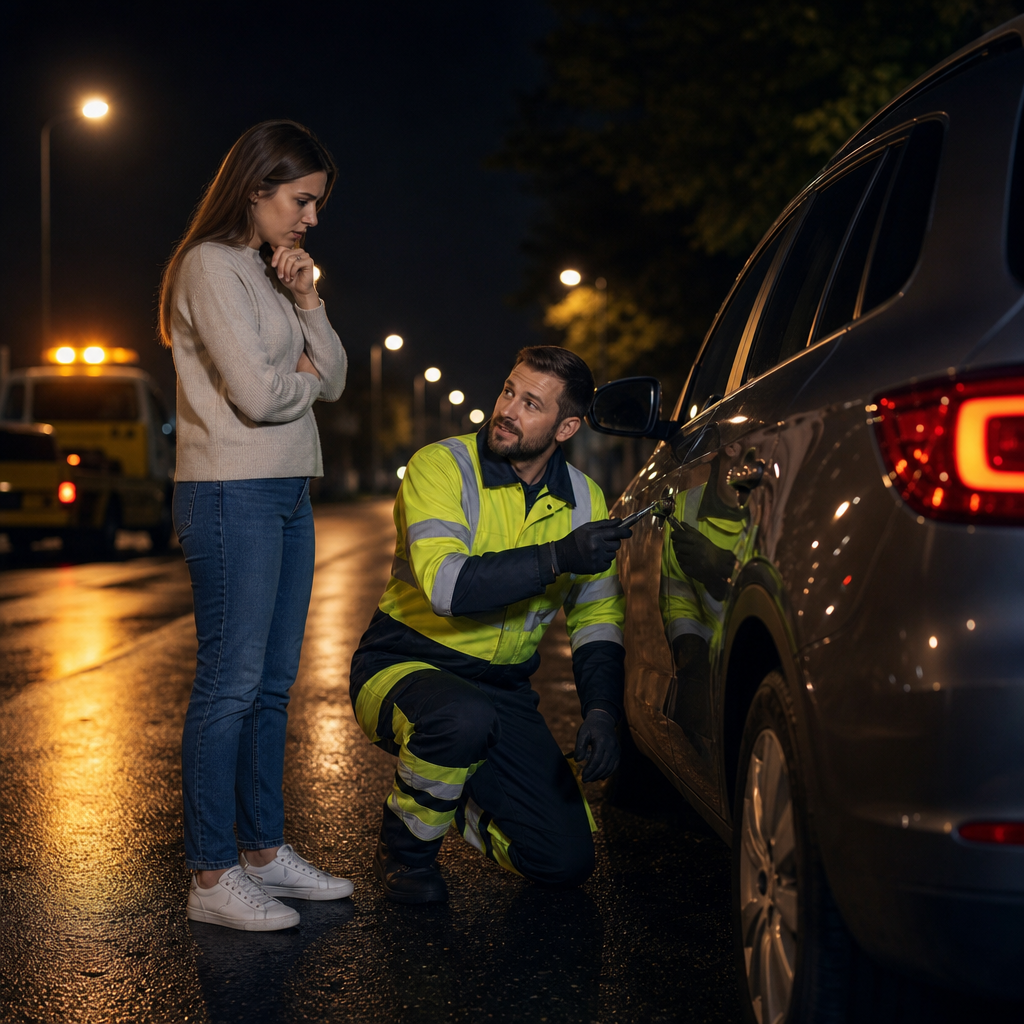
If you have a usable spare, a safe level location, and the vehicle can be supported properly, changing a tire may be an option. If traffic exposure, extreme heat, missing tools, damaged wheel components, or an unsafe parking area complicates the job, request emergency towing instead of attempting roadside work under pressure.
4. For a heat-stressed battery, limit repeated start attempts
Heat can shorten battery life and expose weak electrical connections. Common roadside signs include a rapid clicking sound, slow cranking, dim interior lights, or no response when turning the key or pressing the start button.
Check that the vehicle is in park or neutral and that obvious accessories are off. If the vehicle still will not start, avoid repeated attempts. A jump-start can help in some cases, but it does not establish that the vehicle will remain running or that the underlying issue is solved. If your location is safe and you need help getting started, use jump-start service. If the vehicle starts but immediately shows warnings, stalls, smells hot, or cannot be safely driven, request a tow.
5. Prepare the dispatcher for the actual pickup, not just the destination
Accurate details help a towing or roadside-assistance team locate and access your vehicle in West Palm Beach, Palm Beach, Florida. Before calling, gather the information that affects the response:
- Your exact location, including the closest address, cross street, parking area, or business entrance.
- Your direction of travel if you are alongside a roadway.
- Where the vehicle sits: shoulder, parking lot, garage entrance, driveway, median, or another access point.
- Vehicle color, make, model, and whether it can roll and steer.
- The heat symptom: overheating warning, steam, flat tire, no-start, battery warning, or multiple issues.
- Any access concern, such as a low-clearance area, tight parking position, blocked gate, or vehicle facing the wrong direction for easy loading.
- A callback number and a safe place where you can wait.
Clear location details matter most when you are stressed, hot, or unable to see a clear street sign. Take a moment to verify them before submitting the request. For a car that is immobilized, overheating, or unsafe to drive, a calm handoff to 24-hour towing is often the safest next step.
Heat breakdown checklist before help arrives
- Move yourself and passengers away from moving traffic when a safe exit is available.
- Use hazard lights and keep doors closed on the traffic-facing side.
- Keep the hood closed if the engine is hot or steam is present.
- Do not touch hot metal, coolant components, or damaged tire material.
- Bring keys, phone, identification, and needed belongings with you if leaving the vehicle.
- Watch for the service provider from a safe position; do not stand in the roadway to flag anyone down.
- Update the dispatcher if the vehicle is moved, the condition changes, or your location details change.
Frequently asked questions
Can I drive with the temperature gauge above normal if the car still runs?
No. A rising or high temperature gauge is a reason to pull over safely. Continuing can turn a cooling-system problem into a more serious breakdown. If the warning persists, steam appears, or coolant is leaking, arrange a tow.
Should I add coolant immediately after an overheating warning?
Not while the engine is hot. Pressurized cooling systems can release hot fluid or steam. Let the vehicle cool fully and follow the vehicle manufacturer’s guidance. If you are stranded or unsure, towing is safer than roadside experimentation.
Does a tire-pressure warning always mean I have a flat?
No, but it should not be ignored. The warning can reflect pressure changes or a leak. If the tire looks low, the vehicle pulls, vibrates, or loses air quickly, stop and avoid driving farther on it.
Can a jump-start solve a battery problem caused by heat?
A jump-start may get the vehicle running, but it may not solve the reason the battery failed. If the vehicle will not stay running, has warning lights, or you are in an unsafe location, request towing rather than relying on repeated jump attempts.
What should I tell roadside assistance if I do not know the mechanical problem?
Describe the visible symptom and the vehicle’s condition: for example, “temperature warning and steam,” “front tire is flat,” or “clicks but will not start.” Then provide your exact West Palm Beach location, access details, and whether the vehicle can roll and steer.