The highest-risk mistake is trying to force a jump start while your vehicle is stopped in an exposed, unsafe position or while the battery appears damaged. The safer alternative is to get to the safest available spot, limit repeated starting attempts, and give roadside assistance a clear report before help is dispatched.
A dead battery can look simple from the driver’s seat: the engine will not crank, lights may dim, or the dashboard may click. Yet a prepared call helps the responding technician arrive with a better picture of the vehicle, access situation, and likelihood that a jump start can get you moving. In West Palm Beach, Palm Beach, Florida, that preparation also helps you decide if the vehicle should be driven after the start—or handled as a tow situation instead.
A realistic moment: the car will not start, and you need a clear next move
Imagine you return to your car after it has been parked. You press the start button or turn the key, but the engine does not crank. Perhaps interior lights are weak, the dashboard flickers, or you hear rapid clicking. Your first goal is not to diagnose every possible cause. Your goal is to give the roadside provider enough usable information to prepare for battery assistance.
Before calling, take a breath and note what happened:
- Did the engine crank slowly, click, stay silent, or try to start normally without catching?
- Are the headlights, interior lights, radio, or power locks weak or completely off?
- Did the vehicle start earlier that day, or has it been sitting for an extended period?
- Did any warning message, battery symbol, unusual smell, smoke, or visible fluid issue appear?
Do not keep attempting to start the vehicle over and over. Repeated attempts can further drain a weak battery and make the initial symptom harder to describe. Turn off accessories such as climate control, audio equipment, charging cables, and interior lights if they are still on.
Immediate action: make the call safer and more useful
Quick action checklist: Park as safely as possible, turn on hazard flashers if appropriate for your location, put the vehicle in park, set the parking brake, gather your vehicle details, and call for help if the battery issue is not safely manageable.
If you are already safely parked, stay aware of traffic, nearby vehicles, and your surroundings. Avoid opening the hood or attempting to connect cables if doing so places you near moving traffic, if you are uncertain where connection points are located, or if the battery has visible damage.
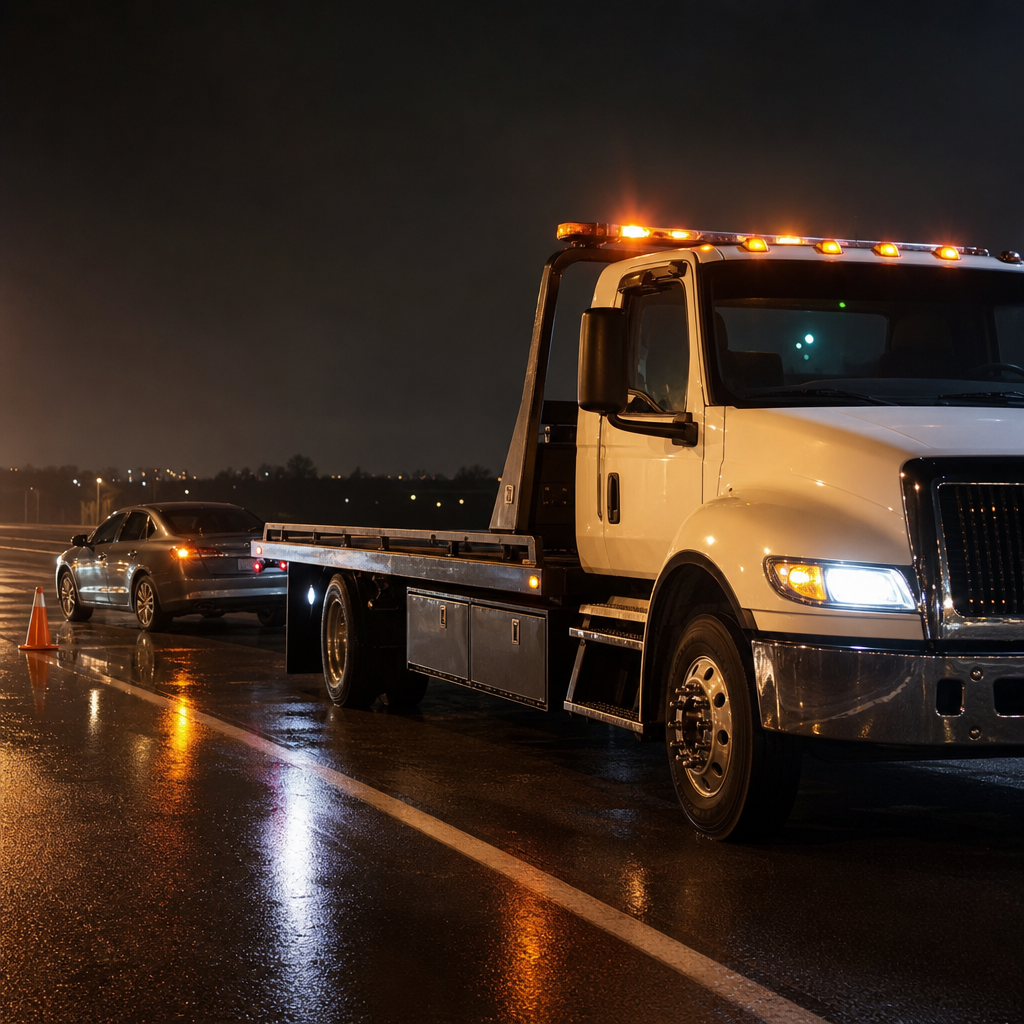
Call for professional help promptly if you notice a swollen battery case, leaking material, smoke, a burning odor, damaged battery cables, or signs that the vehicle may have a larger electrical problem. A jump start is not the right first step for every no-start condition. For urgent roadside situations, use emergency towing assistance rather than continuing to troubleshoot in an unsafe location.
The information that helps a jump-start provider prepare
Have the following details ready. You do not need to know mechanical terminology; clear observations are more valuable than guesses.
- Vehicle identification: year, make, model, and body style if known. Mention if it is a hybrid, electric vehicle, or has a nonstandard battery location.
- Your no-start symptoms: explain exactly what happens when you try to start it: no response, clicking, dim lights, slow crank, or normal cranking without the engine starting.
- Battery condition: report any visible corrosion, loose-looking cables, battery warning message, swelling, leak, odor, smoke, or recent battery trouble. Do not touch a damaged battery to inspect it.
- How long it has been parked: a vehicle that sat overnight may present differently from one that stopped after a short errand or immediately after driving.
- Recent events: mention headlights left on, a door that may not have closed fully, accessories used while parked, or a prior recent jump start. These details can help frame the situation without assuming the cause.
- Vehicle position: tell the dispatcher if the vehicle is in a driveway, parking space, garage, lot, curbside position, or another restricted-access area.
If your vehicle has a manual transmission, an unusual hood release, an aftermarket alarm, or battery terminals located somewhere other than the engine bay, say so. The technician may need access instructions before beginning service.
Location and access details that should not be skipped
A precise location is as useful as the vehicle details. In West Palm Beach and elsewhere in Palm Beach, Florida, a vehicle can be easy to find but difficult to safely reach if it is behind a gate, inside a garage, blocked by parked cars, or positioned tightly against a wall.
Share these access details during the call:
- The full address, parking area name if one is posted, and the closest visible entrance or building reference.
- Your vehicle color and its exact placement within the property.
- Whether the hood can be opened and whether the driver’s door is unlocked.
- Gate codes, garage clearance concerns, security check-in requirements, or instructions for reaching a lower or upper parking level.
- Any condition preventing safe access to the front of the vehicle, where battery access is commonly located.
If you are on a roadway, give the safest description you can provide and state that the vehicle is roadside. Do not walk into traffic to find a better reference point. If you can move to a safer place without driving the disabled vehicle, do so; otherwise remain in the safest practical position and wait for instructions.
After the jump: decide between driving, monitoring, or towing
A successful jump start means the engine has started. It does not automatically confirm that the battery will hold a charge or that the charging system is operating normally. This is where vehicle condition matters more than urgency.
Consider driving only if the vehicle starts normally after assistance, there are no warning signs that make continued operation questionable, and you can proceed without creating a roadside risk. Ask the technician what they observed and follow any practical guidance they provide about the vehicle’s immediate condition.
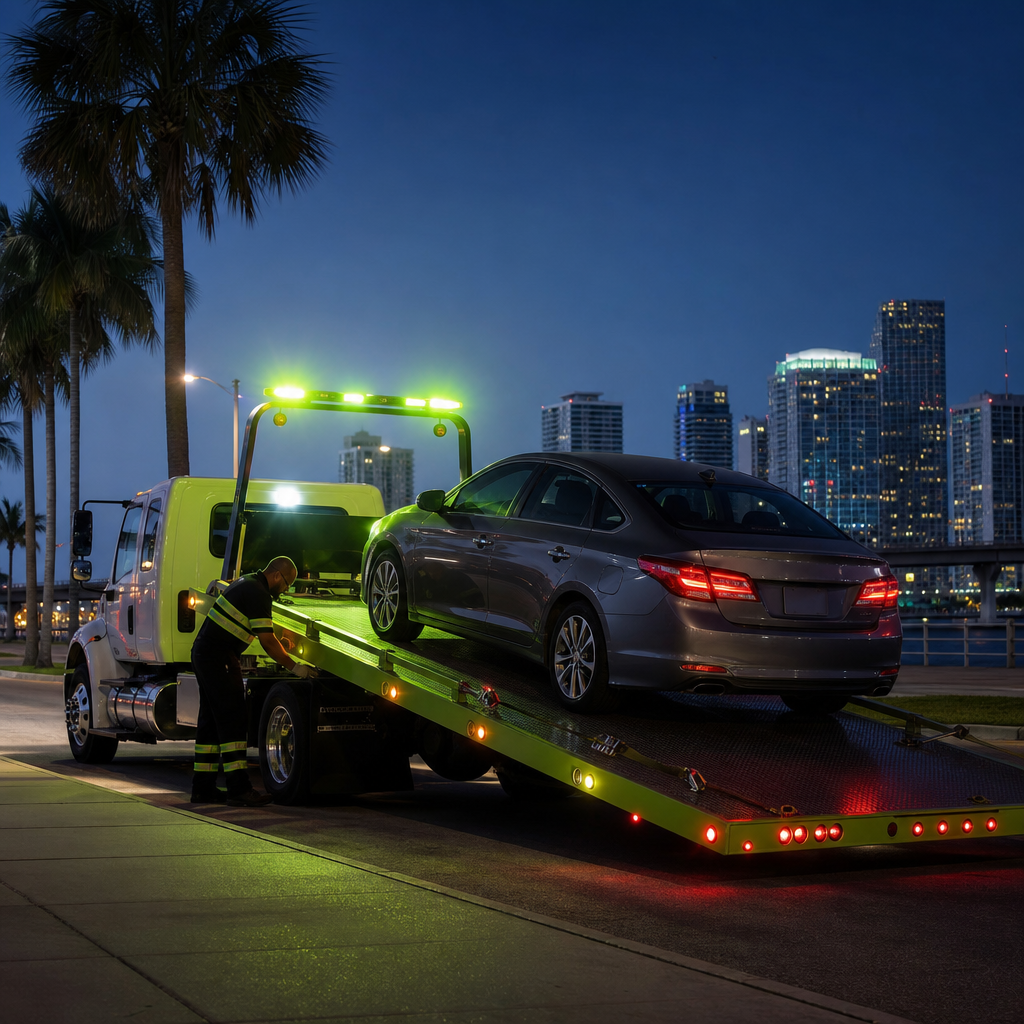
Request a tow rather than relying on a drive-away start if the vehicle will not remain running, the battery appears damaged, warning lights or electrical symptoms persist, cables are compromised, or the vehicle repeatedly needs a jump. A flatbed may be the appropriate transport option for a vehicle that should not be driven; see flatbed towing options. If the situation is straightforward and safely accessible, jump start service can be the direct next step.
Service handoff: what to confirm before help arrives
Once service is arranged, keep your phone available and confirm the core details: your callback number, vehicle description, exact location, access instructions, and reported symptoms. If your situation changes—such as a gate closing, the vehicle being moved, or a new warning sign appearing—update the provider.
Have your keys available and be ready to explain the issue in one sentence: “The vehicle is a [year/make/model], parked at [location], and it [clicks/has dim lights/does not respond] when I try to start it.” That simple handoff keeps the visit focused.
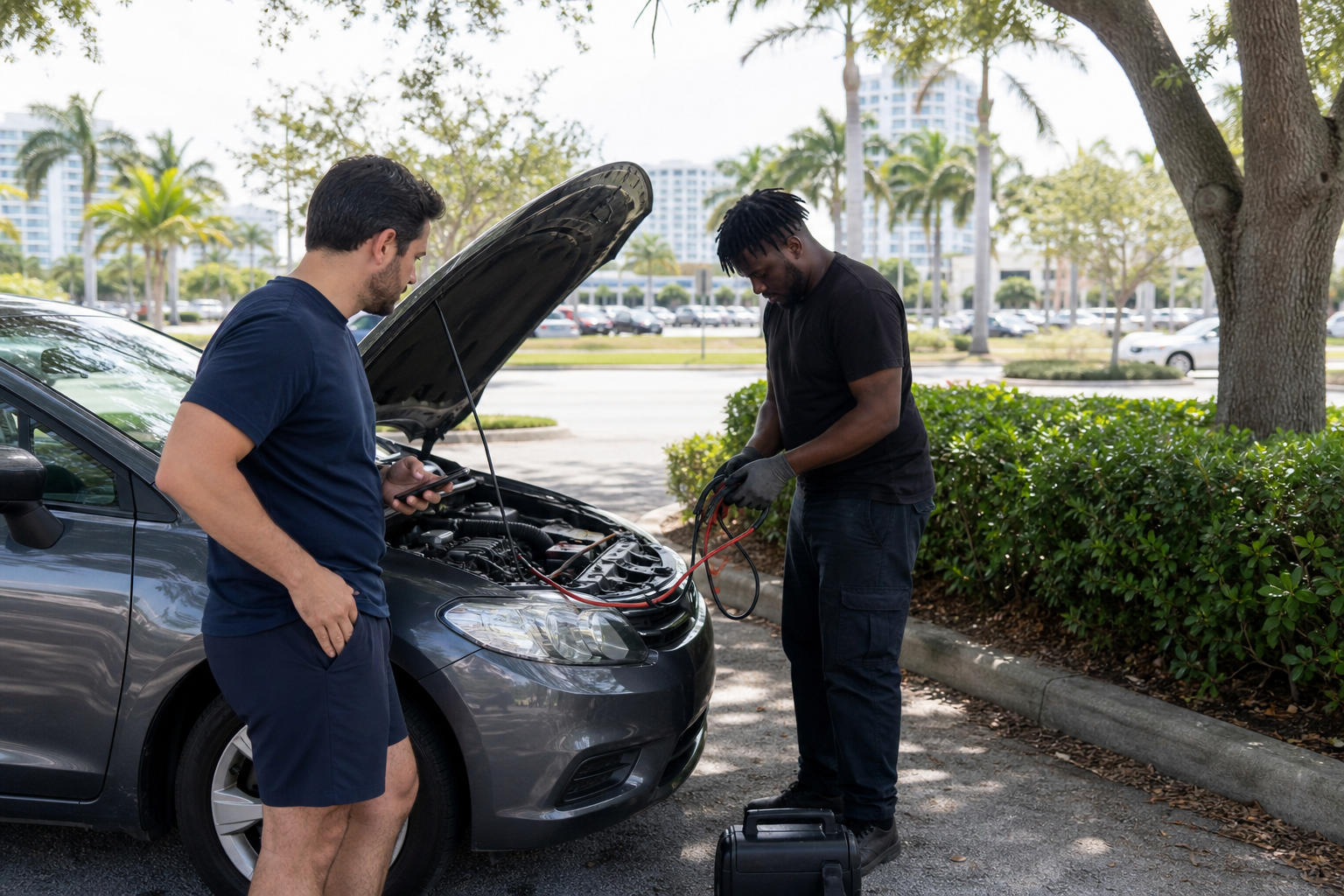
Decision-based next step: If the vehicle is safely parked, the battery shows no visible damage, and the main symptom is a weak or dead start, request battery jump start assistance. If it cannot safely be accessed, will not stay running, or shows signs that driving could be unsafe, choose 24-hour towing assistance instead.
Jump-start preparation FAQs
Do I need to know the exact cause of the dead battery?
No. Describe what you saw and heard instead of guessing. Weak lights, clicking, no response, warning messages, and how long the vehicle was parked are useful details.
Should I open the hood before roadside assistance arrives?
Open it only if you can do so safely and without standing in a traffic-exposed area. Do not handle a battery that looks swollen, leaking, damaged, or unusually hot.
What if my car starts after a jump but I am not confident driving it?
Tell the technician. A started engine is not the same as a confirmed dependable vehicle. If the vehicle has persistent warning signs, repeated no-starts, or questionable electrical behavior, towing can be the more appropriate choice.
What location detail is most helpful in a large parking area?
Provide the full address plus the nearest entrance, building reference, level if applicable, vehicle color, and where the car sits within the lot. Mention gates, garages, or other access barriers early in the call.