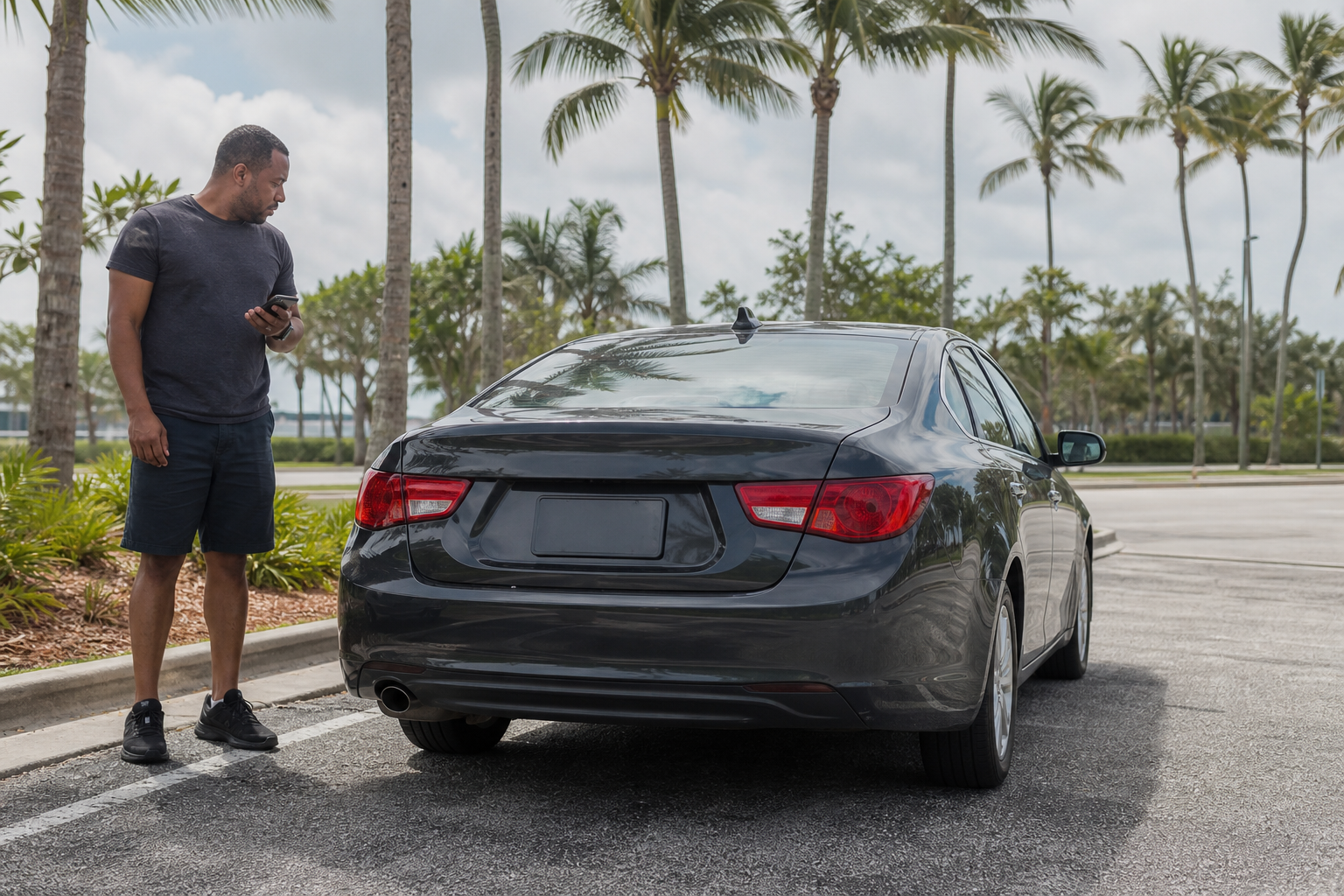
Do not pry open the trunk, smash a window, or force a door handle. Those reactions can turn a locked-key problem into broken glass, bent trim, damaged weather seals, or an unsafe vehicle that should not be driven. The safer move is to secure yourself and the vehicle, confirm which access options still exist, and get professional lockout help if the trunk cannot be opened without risking damage.
Do this first: the 60-second trunk lockout reset
- Move out of traffic and stand somewhere safe, away from passing vehicles.
- Check every exterior door once. Do not repeatedly pull handles or use force.
- Look for a second key, key fob, wallet key card, phone-based vehicle access, or a trusted person who can bring a spare.
- Confirm that no child, pet, or vulnerable person is inside the vehicle. If anyone is trapped or in immediate danger, contact emergency services first.
- If the only keys are in the trunk, stop trying improvised entry methods and arrange lockout assistance.
Situation matrix: identify the trunk-lockout scenario
| What you notice | Likely situation | Best next move |
|---|---|---|
| All doors are locked, and your keys are visible through the rear glass or known to be in the trunk. | A full vehicle lockout with trunk access unavailable. | Use a spare, approved remote-access feature, or call for professional car lockout service">car lockout service. |
| One door opens, but the trunk release does not work. | The trunk may be valet-locked, electronically disabled, deadlocked, or affected by a vehicle fault. | Check the owner-approved trunk release location and vehicle manual guidance. Do not pull panels or force the rear seat. |
| Your key fob will not unlock the car, and the vehicle shows no power or reacts weakly. | A depleted vehicle battery, weak fob battery, or another electrical issue may be preventing normal entry. | Try the manufacturer-approved mechanical key method if available. If the car must be powered before access can be restored, request a safe assessment and consider jump start service">jump start service. |
| The trunk was shut after loading bags, groceries, beach gear, or work items, and the key went in with the load. | The key is likely loose in the cargo area rather than in a dedicated key slot. | Do not shake, slam, or repeatedly strike the trunk lid. Treat it as a standard lockout and preserve the vehicle’s locks and bodywork. |
| The key is in the trunk, but you also suspect a flat tire, damaged wheel, overheating warning, collision damage, or another condition affecting safe driving. | This is more than a lockout; the vehicle may not be safe to drive after entry is restored. | Plan for a vehicle-condition assessment. A flatbed towing option">flatbed towing option may be the safer choice than driving away. |
Stop or continue: make the safe decision before attempting entry
Continue with a simple self-check only if all of these are true
- You are in a safe place, not exposed to moving traffic or an unsafe parking situation.
- You have an authorized way to unlock the vehicle, such as a spare key or a vehicle-maker app you already use.
- You know the method is intended for your specific vehicle and does not require force, tools, or bypassing security components.
- The vehicle appears otherwise safe to drive once it is unlocked.
Stop and call for help if any of these apply
- You are considering a coat hanger, wedge, screwdriver, wire, pry tool, broken window, or forced rear-seat access.
- The vehicle is on a shoulder, near active traffic, in severe weather, or in a location where you do not feel safe waiting alone.
- The fob, locks, battery, trunk latch, or electronic release seems to be malfunctioning.
- You cannot confirm that an online unlock tip applies to your exact vehicle.
- The car has damage or a mechanical condition that makes driving after entry questionable.
A trunk lockout can look simple from outside, but modern door and trunk systems often have side-impact components, wiring, sensors, weather seals, and anti-theft features near common improvised entry points. A professional lockout response is usually the lower-risk path when normal access is unavailable.
Roadside checklist: protect the vehicle and avoid making access harder
- Secure your position. Keep a safe distance from traffic. If you are in a parking area, stay visible and avoid blocking vehicle lanes.
- Check your pockets and belongings slowly. Look for a second fob, mechanical key insert, spare key card, or a key that may have fallen into a bag before assuming it is in the trunk.
- Check every door once. A rear door, passenger door, or hatch may be unlocked. Do not tug repeatedly; repeated force can damage a handle or lock mechanism.
- Use only approved access features. If your vehicle has a factory app or remote-unlock program already set up, follow its normal process. Avoid downloading unknown apps or sharing account credentials with strangers.
- Keep the vehicle closed after confirming the lockout. Do not leave an already-open door unsecured while you search for a solution.
- Do not disconnect the battery or force a fuse-related workaround. A trunk key problem does not automatically mean electrical work is needed, and improvised electrical steps can create new issues.
- Protect documents and valuables. If your registration, identification, medication, or work equipment is in the trunk, tell the service provider so they understand the urgency. Do not announce valuables to bystanders.
West Palm Beach vehicle condition check: drive after entry or arrange towing?
In West Palm Beach, Palm Beach, Florida, the lockout itself does not always require a tow. If the vehicle unlocks cleanly, starts normally, has properly inflated tires, no warning signs, no collision damage, and no signs of overheating or fluid leakage, driving it may be reasonable.
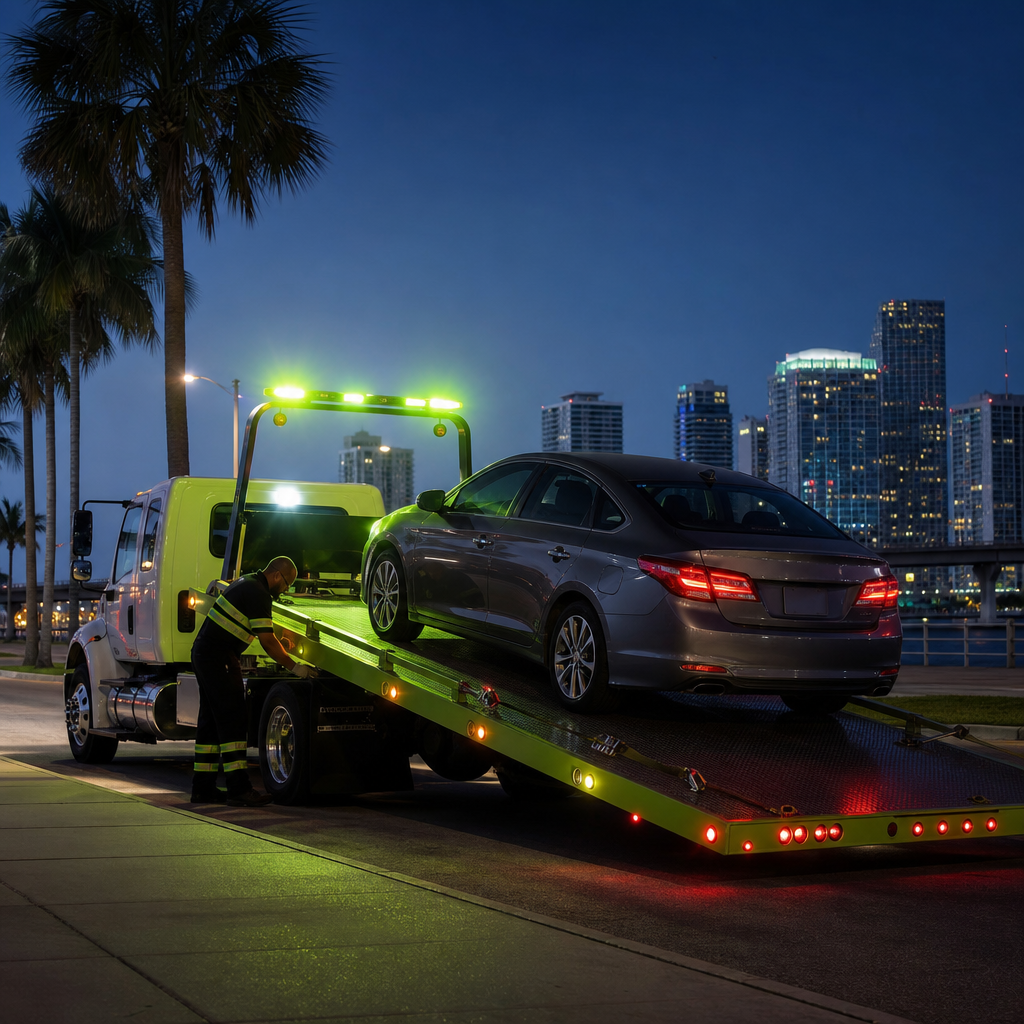
Choose the tow-versus-drive decision based on the vehicle’s condition after access is restored, not just the inconvenience of the locked trunk. Do not drive away simply because the keys are back in your hand if the vehicle has a flat tire, wheel damage, an unstable steering feel, visible leak, overheating indication, or damage that could affect safe operation. In that situation, ask for 24-hour towing assistance">24-hour towing assistance and describe the condition clearly. Flatbed transport can be appropriate when avoiding further rolling damage or driving risk is the priority.
Service preparation: what to have ready before you call
A clear call helps the roadside provider arrive prepared for a lockout rather than a general towing request. Gather the following from a safe location:
- Your exact location in West Palm Beach, including the property name, nearby cross streets, parking level, or lot section if known.
- Vehicle year, make, model, color, and license plate number.
- A direct description: “The key is locked in the trunk and all doors are locked,” or “One door opens, but the trunk release will not work.”
- Whether the vehicle has a mechanical key, keyless fob, app-based access, alarm, dead battery symptoms, or a known trunk-latch issue.
- Any safety or vehicle-condition concern, including a flat tire, collision damage, warning light, blocked position, or unsafe traffic exposure.
- Proof that you are authorized to access the vehicle, if requested. Keep documents available without leaving yourself or your belongings exposed.
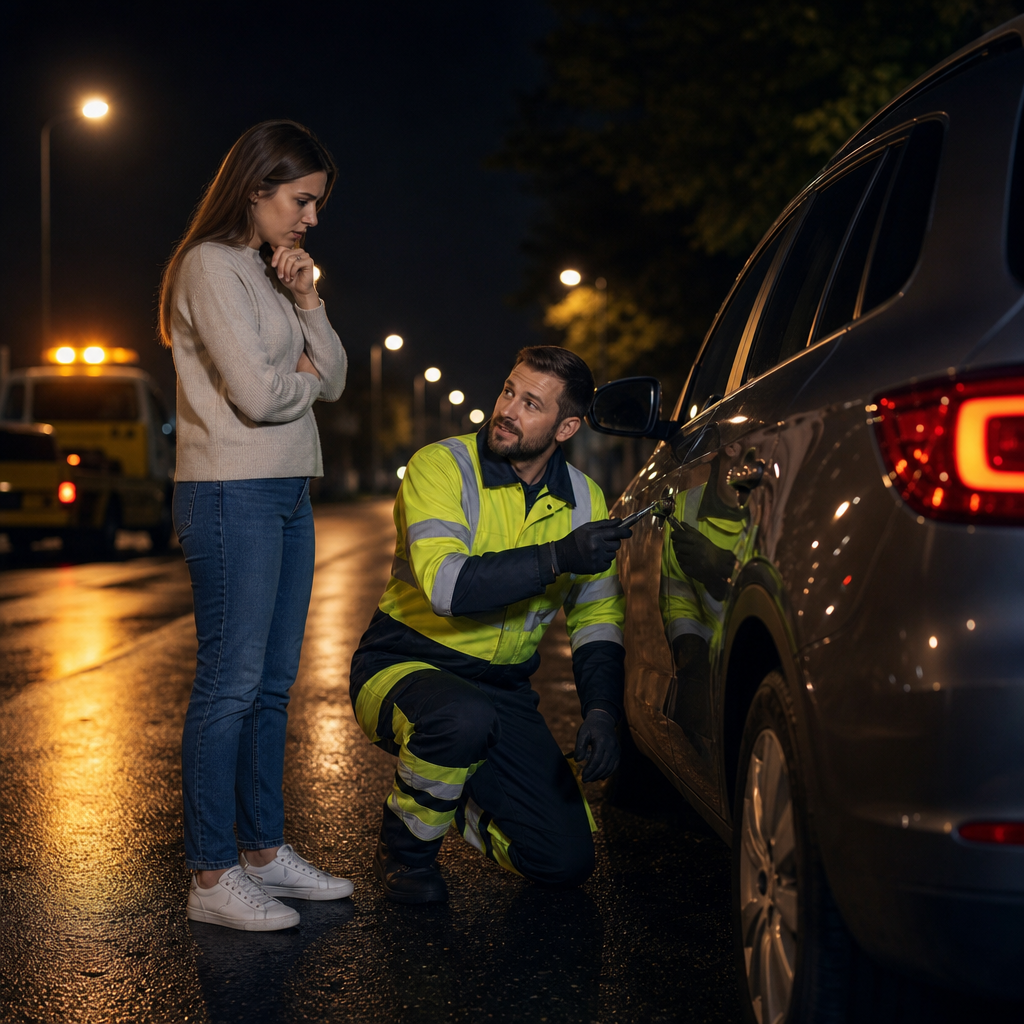
For a straightforward trunk lockout, ask for roadside lockout help. If the vehicle cannot be safely driven after access is restored, explain that at the start so the provider can help determine whether towing is the safer next step.
Quick answers for trunk lockouts
Can I open the trunk by folding down the rear seats?
Only use a rear-seat release if you can access it normally and it is designed for your vehicle. Do not force seatbacks, pull trim, or damage latches to reach the trunk. If the cabin is locked, professional lockout help is safer.
My key fob is in the trunk. Will the car still unlock?
Some vehicles may detect a fob near the trunk, while others will not unlock once the trunk is shut. The result depends on the vehicle’s system, battery condition, and settings. Avoid repeated attempts that drain a weak fob battery or vehicle battery.
Is breaking a window faster than calling for lockout service?
Breaking a window can create sharp-glass hazards, weather exposure, security problems, and a vehicle that may be unsafe or impractical to drive. It is generally a last-resort safety response only when there is an immediate life-threatening emergency.
Do I need a tow if my keys are locked in the trunk?
Not usually. A normal lockout is typically a roadside-access issue. Towing becomes the safer option if the vehicle has a separate condition that makes driving unsafe after entry is restored.
Safety-first next step: If your keys are locked in the trunk and normal access is gone, stay with the vehicle only if the location is safe, avoid damaging entry attempts, and request professional roadside help. If the car also has a condition that should keep it off the road, ask about towing rather than attempting to drive it after the lockout is resolved.