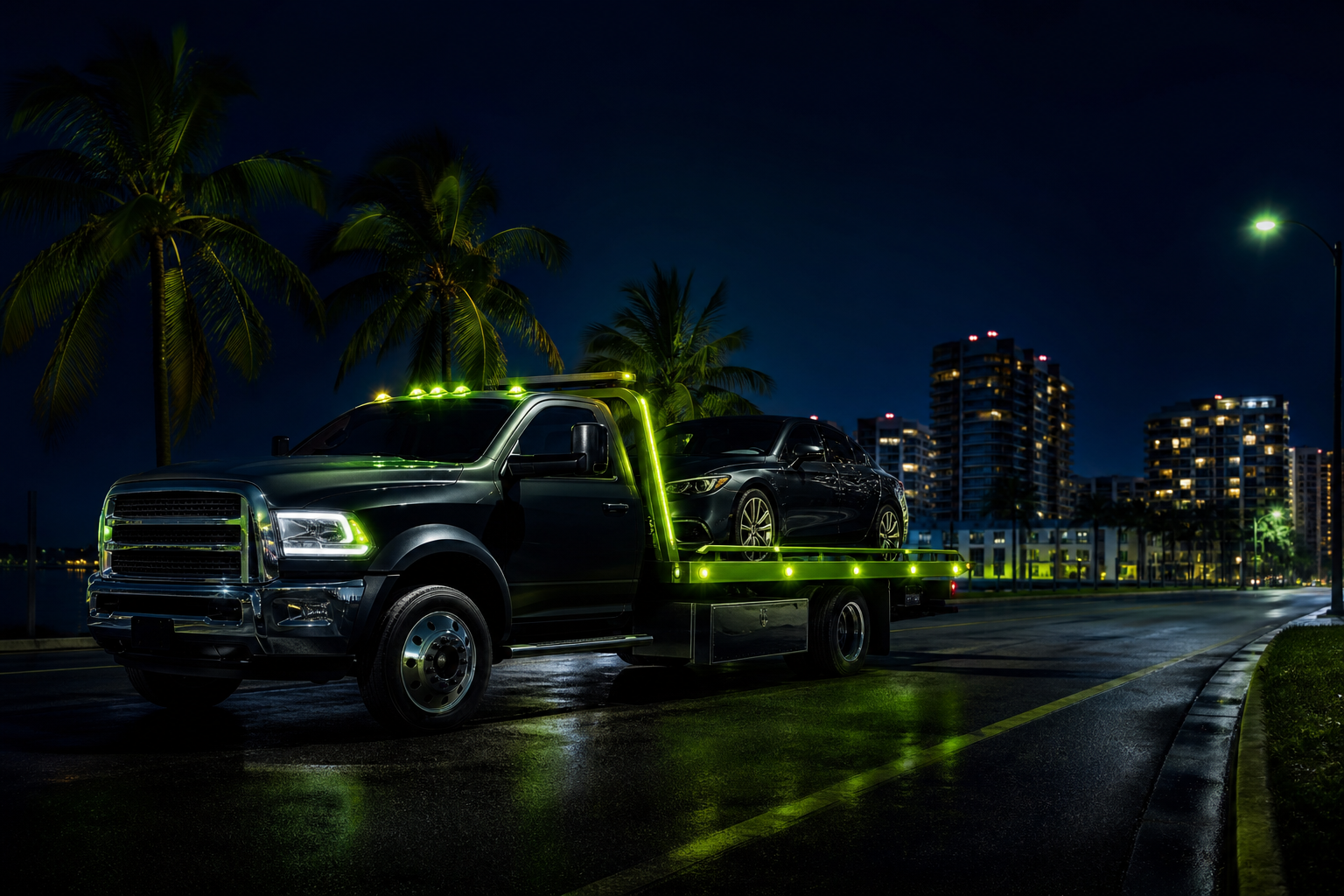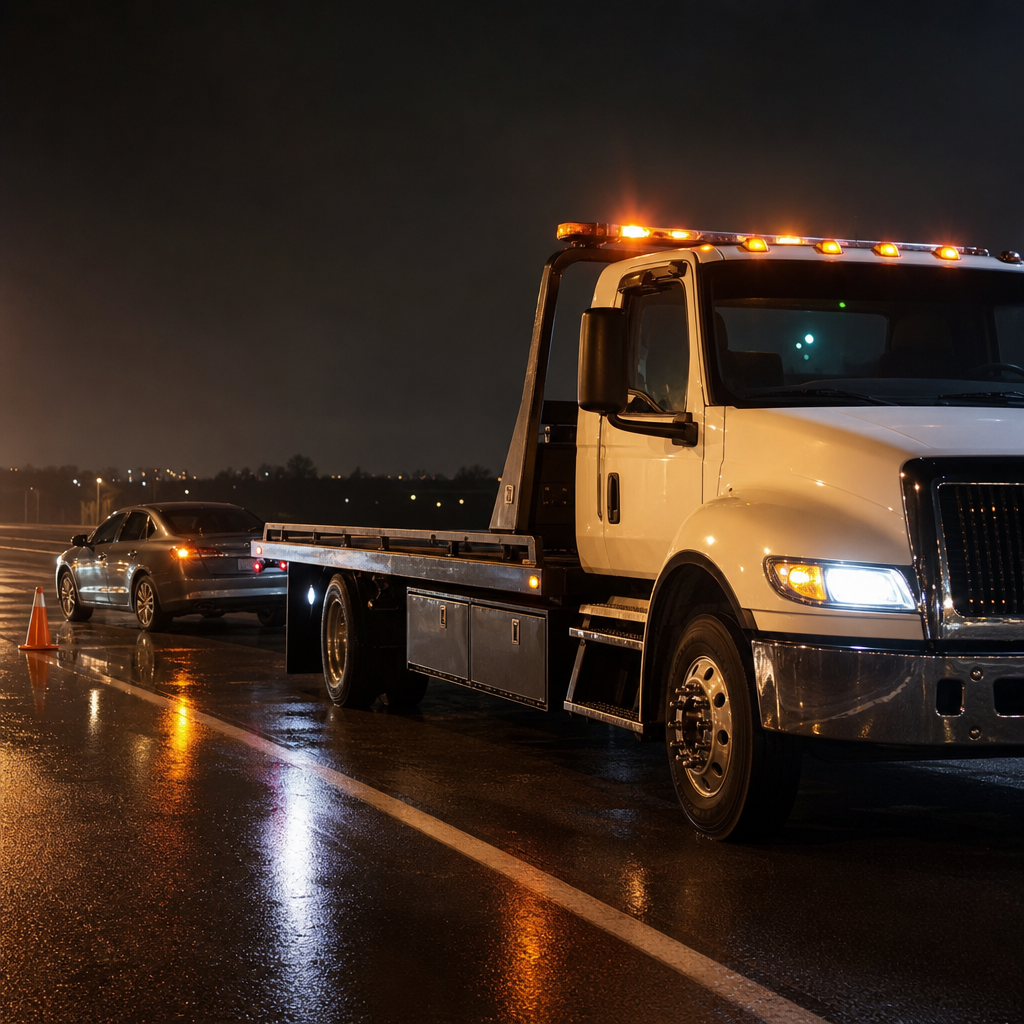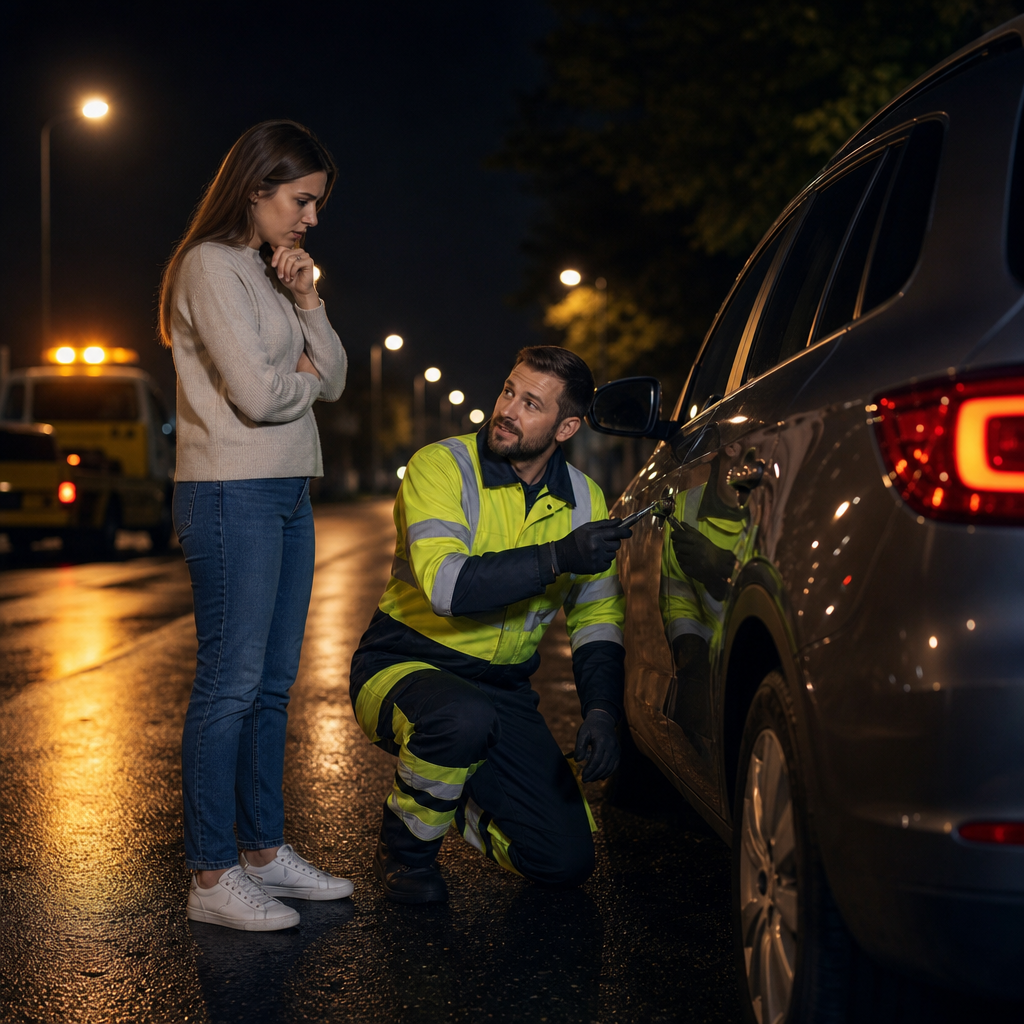
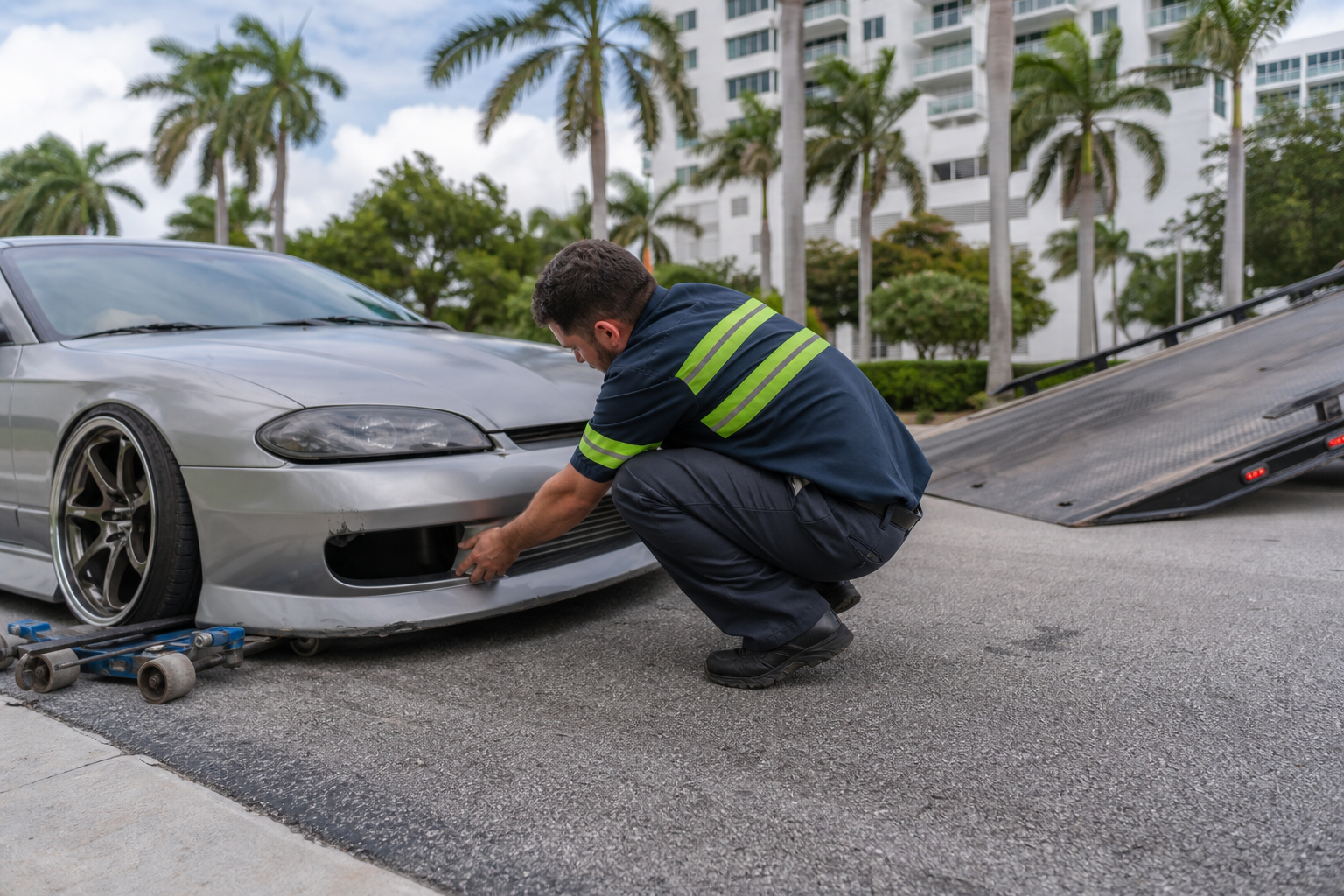
A vehicle is stopped at the roadside. One front corner sits lower than the other, the steering wheel is no longer centered, and the bumper has only a small gap above the pavement. The engine may still run, but that does not answer the critical question: should the vehicle move under its own power, and what towing setup can move it without adding damage?
Match the symptom to the likely handling method
Tow equipment is selected from the vehicle's actual condition, not simply its make or destination. This matrix shows what a dispatcher and operator need to evaluate.
| What you observe | Drive or stop? | Likely handling approach |
|---|---|---|
| Low front bumper, splitter, side skirt, lowered suspension, or limited underbody clearance | Stop if any part may scrape or contact a tire. | A flatbed may be preferred, using a reduced loading angle, ramp extensions, or careful positioning. |
| All-wheel drive, four-wheel drive, or drivetrain type unknown | Do not assume two wheels can remain on the road. | Transport with all four wheels off the pavement, commonly by flatbed or by wheel lift with tow dollies when appropriate. |
| Known front- or rear-wheel drive with free-rolling, undamaged wheels | Drive only if the original problem is fully resolved and no unsafe symptoms remain. | A wheel lift may be suitable when the driven wheels are lifted and the remaining axle can roll safely. |
| Flat tire, broken wheel, severe wheel-angle change, or suspected suspension damage | Stop. Rolling can enlarge tire, wheel, steering, or body damage. | Flatbed loading may require a winch and loading skates so the disabled wheel does not have to rotate. |
| Vehicle will not shift into neutral, parking brake will not release, or wheels are locked | Do not force movement with engine power. | Skates can help move locked wheels onto a carrier; dollies may support an axle during a wheel-lift tow. |
| Loose body panel, dragging undertray, fluid leak, smoke, or burning odor | Stop immediately. | The hazard must be disclosed before dispatch. Significant leakage, smoke, fire, or immediate danger calls for emergency services first. |
| Battery appears discharged, with no collision or mechanical symptoms | A controlled restart may be reasonable. | Request jump-start service. Tow the vehicle if it stalls again, shows warnings, overheats, or does not operate normally. |
Make the stop-or-continue decision
A running engine is not proof that the vehicle is roadworthy. The safer decision depends on steering, braking, wheel position, clearance, warning indicators, and leakage.
Stop and request towing if any answer is yes
- Does a tire rub, wobble, point at an unusual angle, or fail to rotate?
- Does the vehicle pull sharply, sit unevenly, or make grinding or scraping sounds?
- Is any bumper, shield, exhaust part, or suspension component touching the ground?
- Are the brakes, steering, or transmission behaving differently?
- Are warning lights accompanied by overheating, smoke, odor, or loss of power?
- Are you uncertain whether the vehicle is all-wheel drive or whether it can roll in neutral?
Within West Palm Beach or elsewhere in Palm Beach County, a short destination does not make a damaged vehicle safer to drive. Even a brief movement can turn a repairable tire or suspension problem into wheel, body, or drivetrain damage.
Continue only after a limited roadside problem is resolved
Continuing may be reasonable after a successful jump start or another minor roadside correction only when the vehicle starts normally, steering and braking feel normal, every wheel turns freely, no fluid is leaking, no part is dragging, and no critical warning remains. If any check is uncertain, choose towing instead of a road test.
Roadside checklist: inspect without taking risks
- Look from standing height. Compare wheel angles and the height of each corner. Do not kneel in an exposed traffic area.
- Check the path around each tire. Look for folded bodywork, loose liners, or suspension pieces near the tread.
- Scan beneath from the side. Note visible dripping or hanging parts, but never crawl under the vehicle.
- Identify the drivetrain if known. Check reliable vehicle information rather than guessing from appearance.
- Test neutral only when safe. If the selector will not move normally, stop. Do not push or drag the vehicle to prove that it rolls.
- Photograph the condition. Capture each corner, visible damage, and the vehicle's clearance. These images can help explain the situation before equipment arrives.
- Note the pickup constraints. Tell dispatch if the vehicle is in a garage, tight parking position, soft shoulder, incline, or another space with limited access.
How the towing setup is prepared
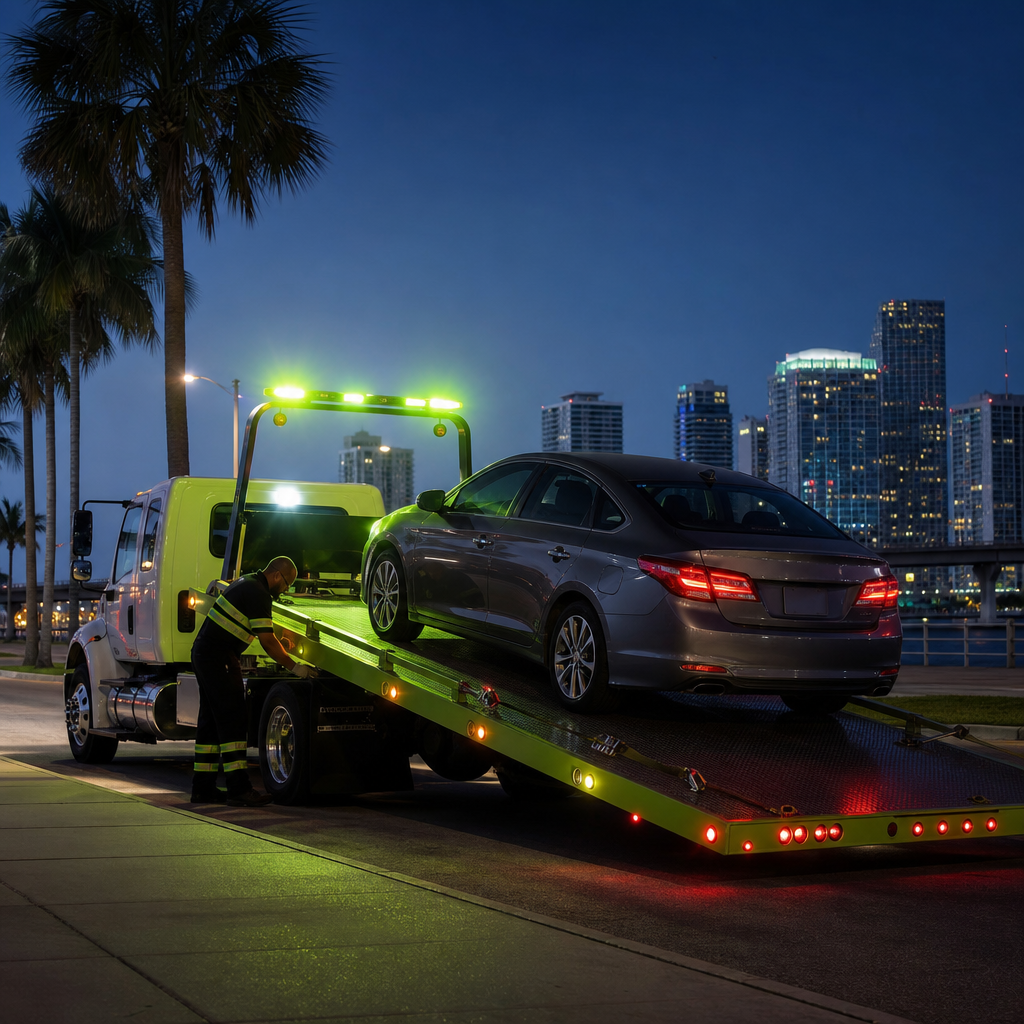
The service provider uses your condition report to choose equipment and plan the loading direction. A request for flatbed towing is especially relevant when clearance is limited, multiple wheels are affected, the drivetrain should remain fully off the road, or the vehicle cannot roll normally.
Flatbed carrier
The carrier deck tilts and the vehicle is winched aboard. The operator must account for the approach angle so the bumper, underbody, or exhaust does not contact the deck. A flatbed reduces road contact during transport, but careful loading still matters.
Wheel lift with tow dollies
A wheel lift raises one axle. Tow dollies are separate auxiliary wheel assemblies placed beneath the tires on the other axle, allowing that axle to travel without its tires turning on the road. Dollies can be useful when all four vehicle wheels must be kept off the pavement but site access or vehicle condition affects the setup.
Loading skates are not tow dollies
Loading skates are low-friction pads positioned under tires that will not roll. They help slide a vehicle onto a flatbed without dragging a locked or damaged tire directly across the surface. Skates are loading tools; they do not carry the vehicle down the road. Tow dollies, by contrast, have their own wheels and support an axle during transport.
Prepare useful details for dispatch
- Vehicle year, make, model, and approximate body style
- Known drivetrain: front-wheel, rear-wheel, all-wheel, or four-wheel drive
- Whether the transmission shifts into neutral
- Which wheels roll and which appear locked, flat, bent, or misaligned
- Any lowered suspension, low bodywork, or limited ground clearance
- Visible leaks, loose panels, collision damage, smoke, or unusual odors
- Pickup position and space available in front of and behind the vehicle
- Pickup in West Palm Beach and the intended destination within or beyond Palm Beach County
Do not minimize damage to obtain a quicker dispatch. Clear details help avoid sending a setup that cannot load the vehicle safely.
Frequently asked questions
Does an all-wheel-drive vehicle always need a flatbed?
It generally needs all four vehicle wheels kept off the road unless the manufacturer specifies another permitted procedure. A flatbed is a common solution, while a properly configured wheel lift and tow dollies may be appropriate in some situations.
Can a car with one locked wheel be loaded?
Yes. An operator may use a winch and loading skates to move the locked wheel onto a flatbed. Tell dispatch which wheel is affected and whether the vehicle can enter neutral.
Will a flatbed automatically protect a low-clearance car?
No method is automatic. The loading angle must still be managed so low bumpers and underbody parts clear the deck. Report lowered suspension or low bodywork before arrival.
Should I try driving a few feet to test the damage?
Not if a wheel is misaligned, a part is dragging, fluid is leaking, or steering and braking have changed. That short test can increase damage. Request emergency towing when the vehicle's rolling condition or safety is uncertain.
Choose service from the condition, not the distance
If the vehicle starts, rolls freely, clears the pavement, and has normal steering and braking after a minor roadside correction, reassess before continuing. If clearance is tight, drivetrain requirements are unknown, a wheel is damaged, or any part may drag, keep the vehicle stopped and arrange the towing method around those facts.