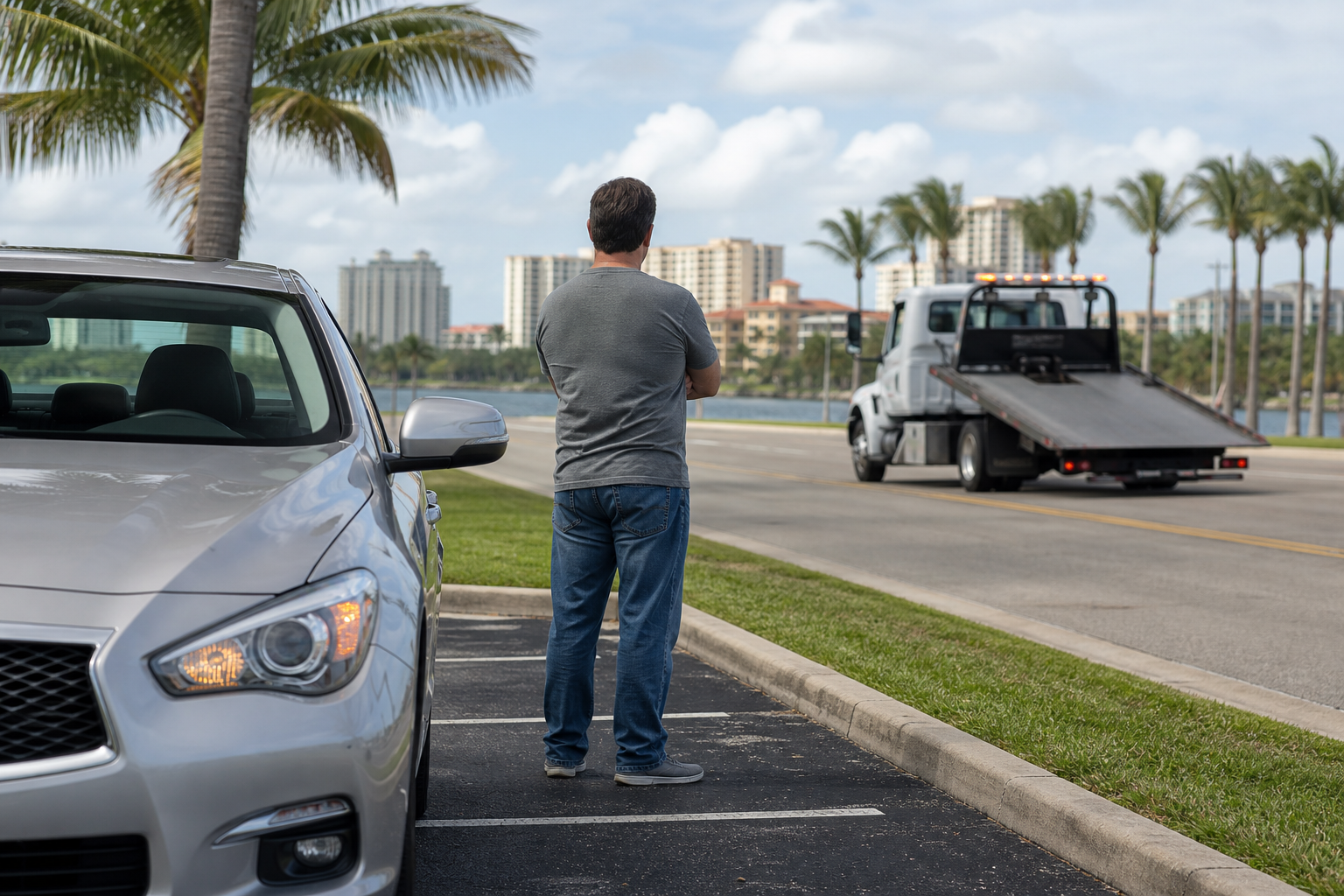
A breakdown, flat tire, dead battery, or lockout can turn an ordinary trip through West Palm Beach into a stressful situation quickly. The best thing to do while waiting for help is not necessarily to start troubleshooting. First, make the scene safer, give the towing provider a precise location, and avoid putting yourself in harm's way.
Do This First: A 60-Second Waiting Checklist
- Move your vehicle out of moving traffic if you can do so safely.
- Turn on your hazard lights.
- Put the vehicle in park, set the parking brake, and keep your doors locked.
- Share your exact location, vehicle description, and problem when requesting help.
- Stay in the vehicle when that is the safer option; move to a protected area only if the vehicle's location is unsafe.
- If you are in immediate danger, have a medical emergency, or are blocking active traffic lanes, call 911.
Get Yourself and Your Vehicle to the Safest Available Spot
If your vehicle is still drivable enough to move a short distance safely, aim for a parking lot, side street, wide shoulder, driveway entrance, or other location away from through traffic. Do not continue driving if doing so could worsen a mechanical problem or create a hazard. A short move out of a travel lane can be helpful, but only if the vehicle can be operated safely.
In West Palm Beach, traffic can move quickly around corridors such as I-95, Florida's Turnpike, Okeechobee Boulevard, Southern Boulevard, and US-1. On any high-speed or heavily traveled road, your priority is distance from moving vehicles. If your car cannot be moved off the roadway, turn on hazard lights and contact emergency services if you believe the vehicle's position presents an immediate danger.
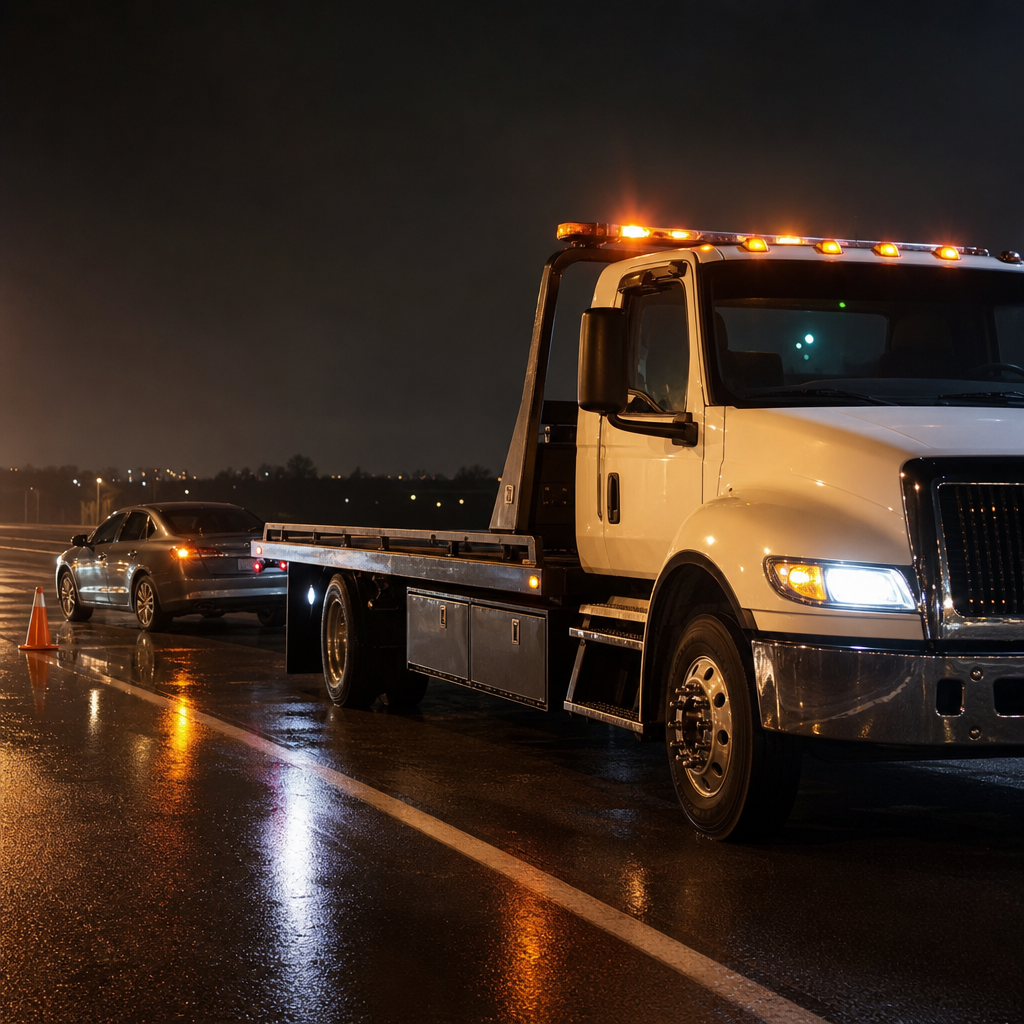
Once stopped, shift into park, engage the parking brake, and turn your wheels away from traffic if you are parked on the roadside. At night or during rain, keep hazard lights on so other drivers can see your vehicle. Avoid standing between your vehicle and traffic, behind the vehicle, or near a blind curve.
Decide Whether to Stay Inside or Move Away From the Vehicle
There is no single rule that fits every breakdown. In many roadside situations, staying inside a locked vehicle with your seat belt fastened is safer than standing near traffic. This is often the best choice when you are on a shoulder, in a parking area, or otherwise reasonably separated from active lanes.
However, if the vehicle is smoking, you smell fuel, there is a fire risk, the vehicle is in an active traffic lane, or another immediate hazard is present, move to a safer location if you can do so without crossing traffic. If you leave the vehicle, stand well away from the road and avoid positioning yourself downhill from the vehicle or directly in front of or behind it.
If children, older adults, pets, or passengers are with you, keep everyone together in the safest practical location. In Florida heat, watch for signs of overheating or distress. If the interior is becoming dangerously hot and there is no safe place to wait outside, seek emergency assistance rather than taking unnecessary risks near traffic.
Give the Tow Provider Information That Helps Them Find You
Clear information can make a towing or roadside-assistance request easier to handle. Before calling, take a moment to identify where you are. A street address is useful, but landmarks and travel direction matter too, especially on major roads.
Have These Details Ready
- Your exact location, including the nearest cross street, exit, business, landmark, or mile marker if visible.
- Your direction of travel, such as northbound or eastbound, when you are on a highway or divided road.
- Your vehicle's year, make, model, color, and license plate if requested.
- The issue: no-start condition, flat tire, locked keys, collision-related towing need, or another problem.
- Whether the vehicle is in a garage, parking structure, driveway, roadside shoulder, or active lane.
- Any access concerns, such as a low-clearance garage or a locked gate.
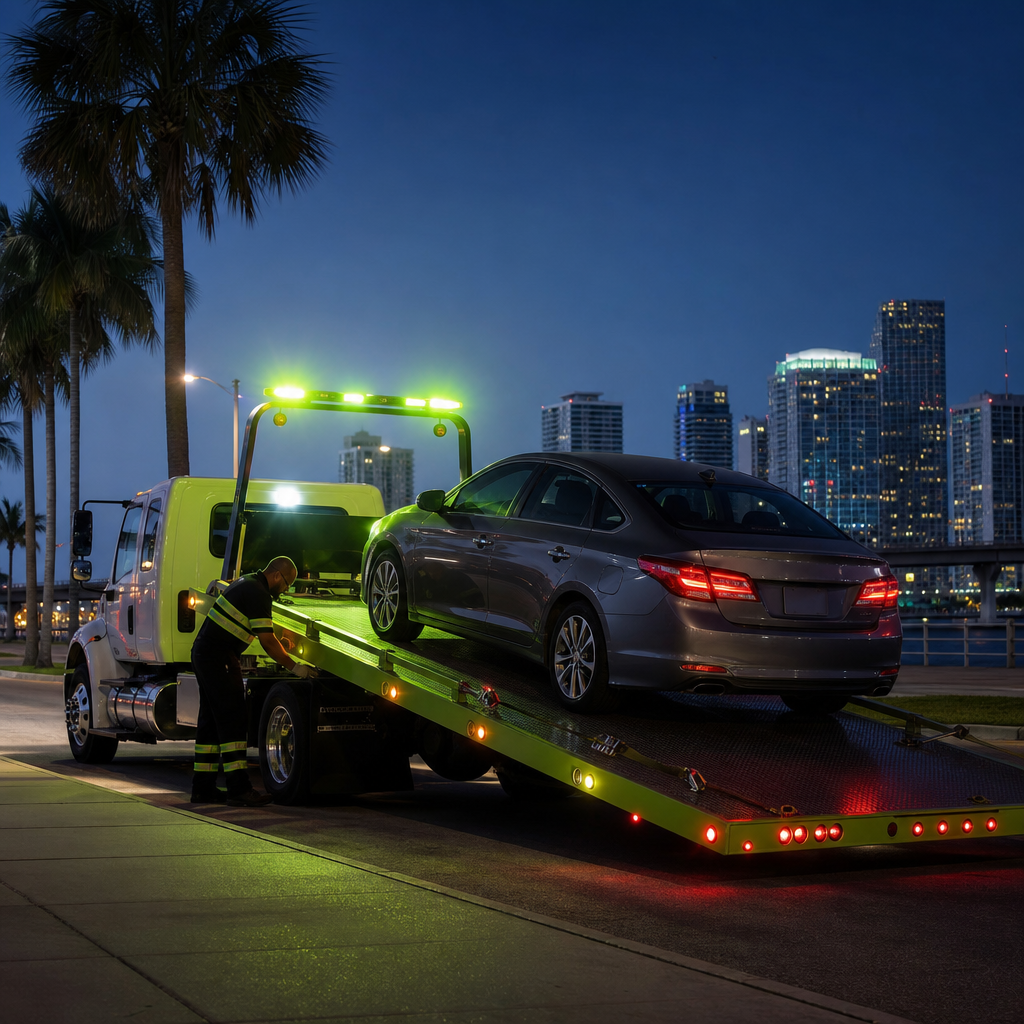
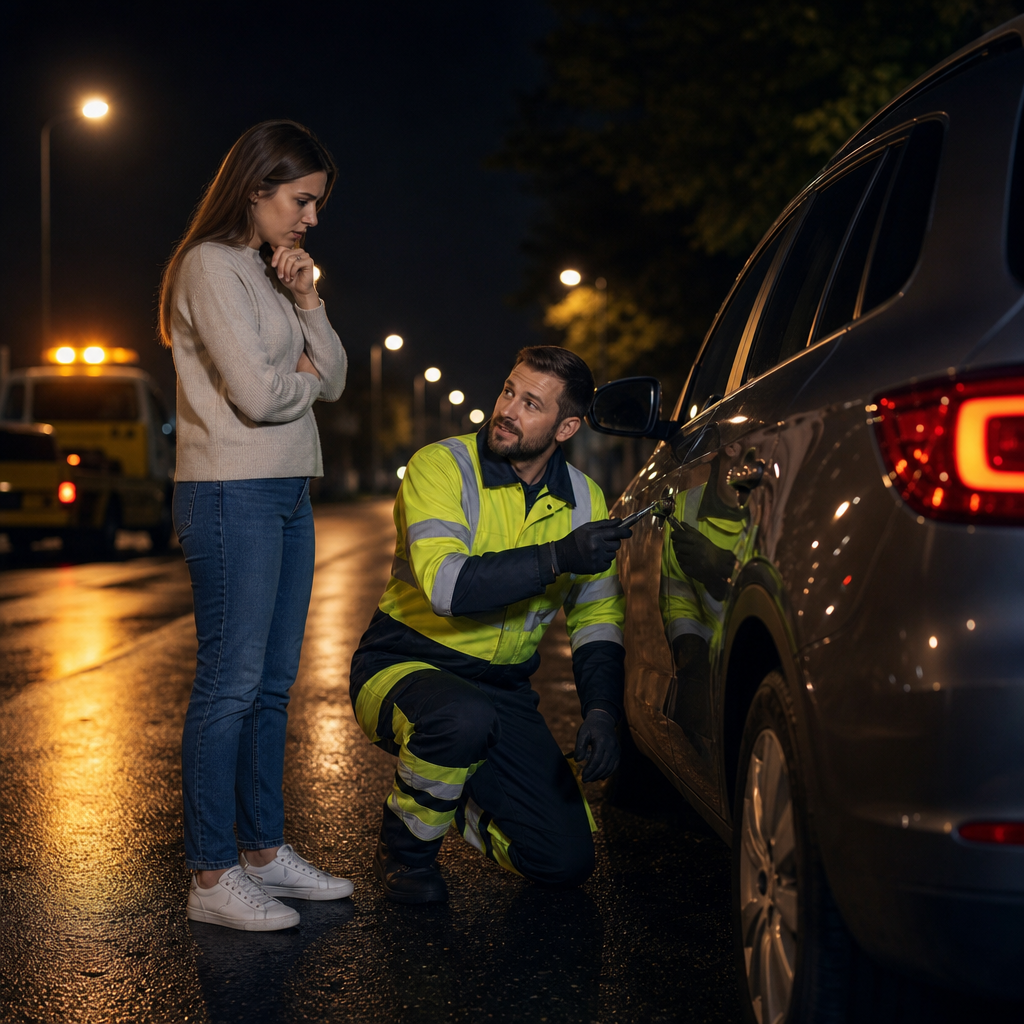
If you need transportation for a disabled vehicle, request 24-hour towing and explain the vehicle's location. If the vehicle needs to be carried rather than pulled, ask about flatbed towing. For a battery-related no-start, jump-start service may be the right first request. If keys are locked inside, use car lockout service rather than trying to force entry.
Protect Yourself While You Wait
Use the waiting period to reduce risk and prepare for the tow operator's arrival. Keep your phone charged if possible, but do not drain the battery by streaming video or making unnecessary calls. If you are parked safely, send a trusted person your location. This can be especially useful if you are waiting after dark or in an unfamiliar area.
Keep valuables out of view. If you need to gather belongings before a tow, take only what you need: identification, medication, wallet, keys, phone, chargers, work items, and personal items you do not want left in the vehicle. Do not step into traffic repeatedly to retrieve things from the trunk or cargo area.
If you are waiting in a parking lot, be aware of your surroundings and avoid accepting help from strangers who pressure you to make a decision. A legitimate towing provider should be able to identify the service you requested and confirm the vehicle details or location you provided.
Prepare the Vehicle for Towing
Once help is on the way, you can make the handoff smoother without attempting repairs. Remove loose personal items, secure any items that could shift during transport, and locate the keys. If your vehicle has special instructions for towing, such as a parking brake issue, damaged wheel, low ground clearance, or electronic shifter concern, tell the dispatcher or tow operator.
Do not crawl underneath the vehicle, attempt to attach towing equipment yourself, or stand close while the truck is loading your car. Give the operator space to work. Before the vehicle is taken, confirm the destination and make sure you understand where the vehicle is going.
When to Call 911 or Seek Emergency Help
A towing provider can handle many disabled-vehicle situations, but some circumstances need emergency response first. Call 911 when there is an immediate threat to life or safety, including:
- A crash with injuries or possible injuries.
- Fire, smoke, a strong fuel smell, or another possible hazardous condition.
- A vehicle stopped in an active traffic lane where you cannot get to safety.
- A medical emergency involving you or a passenger.
- You feel threatened or unsafe where you are waiting.
For a disabled vehicle that is safely off the road but needs urgent transport, emergency towing can be an appropriate option. Describe the situation clearly so the provider understands whether roadside help or a tow is needed.
Frequently Asked Questions
Should I leave my car while waiting for a tow truck?
Usually, stay with the vehicle if it is in a reasonably safe location and you feel safe. If the vehicle is in active traffic, smoking, or exposed to another immediate danger, move to a protected area if you can do so safely and call 911 when appropriate.
What location details should I provide in West Palm Beach?
Provide the street name, closest cross street, nearby business or landmark, direction of travel, and any visible exit or mile-marker information. On larger roads such as I-95 or the Turnpike, direction of travel is especially important.
Can I wait inside my car with the engine off?
Yes, if the vehicle is safely positioned and there is no smoke, fuel odor, flooding concern, or other hazard. Keep doors locked and hazard lights on. Do not run the engine in an enclosed area such as a garage.
What should I remove from my car before it is towed?
Take essentials and valuables, including your phone, wallet, identification, medication, house keys, work materials, and any items you may need before you can access the vehicle again.
What if I only need a jump start or help getting into my locked car?
Tell the dispatcher exactly what happened. A dead battery may only require a jump start, while keys locked inside may require professional lockout assistance. Accurate details help send the right type of help.
Waiting for a tow is easier when you focus on safety first: get out of traffic if possible, make your vehicle visible, communicate your location clearly, and avoid unnecessary roadside risks. When you are ready to request help, use 24-hour towing in West Palm Beach for a disabled vehicle that needs professional transport.