When Flatbed Towing Is the Better Choice for Your Vehicle
Quick answer: choose the option that keeps damage from getting worse
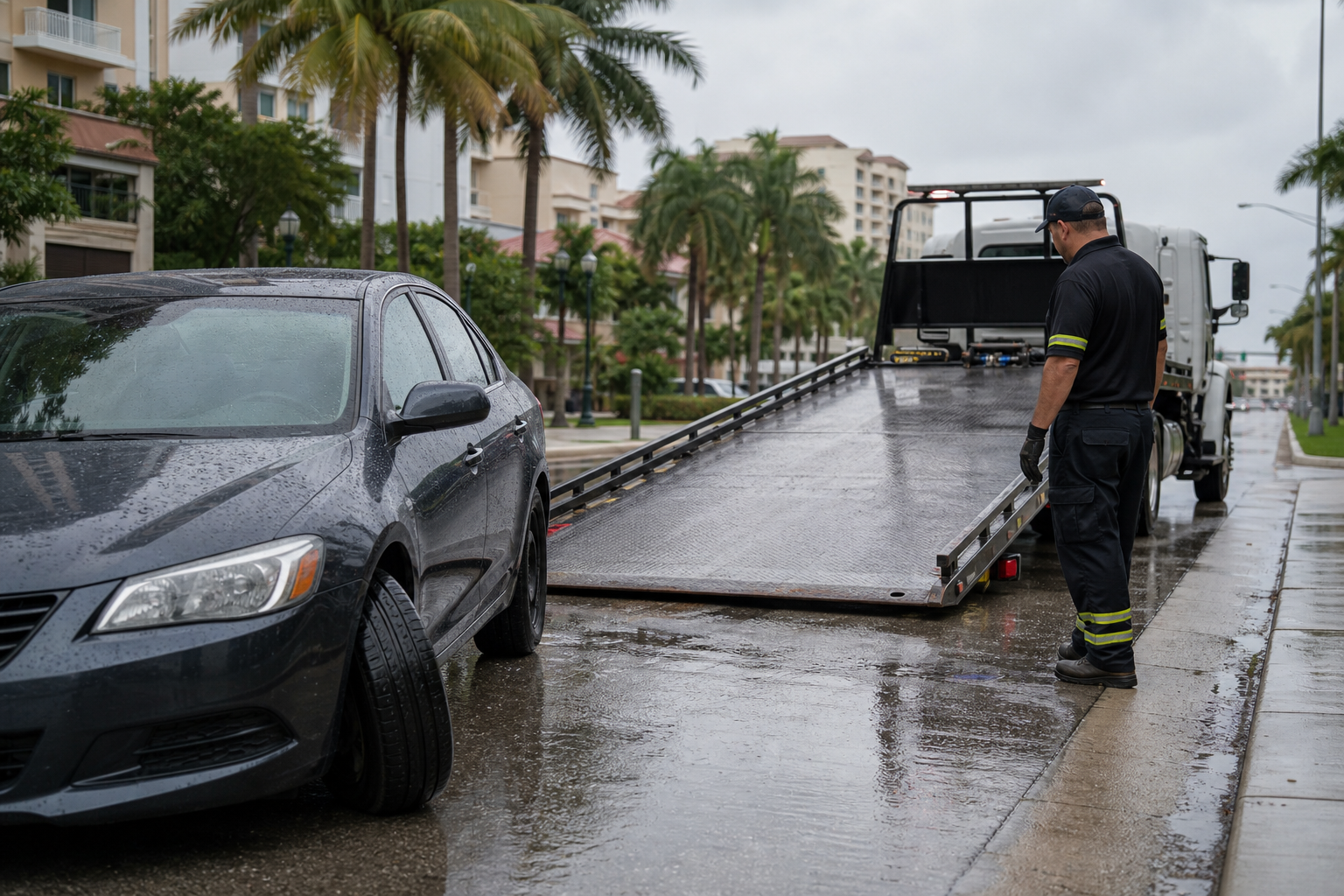
A heavy West Palm Beach downpour can leave pavement slick and standing water difficult to judge. Under those conditions, a vehicle that might seem barely drivable on a dry, clear street can become unsafe if its steering, tires, brakes, or underbody have been affected.
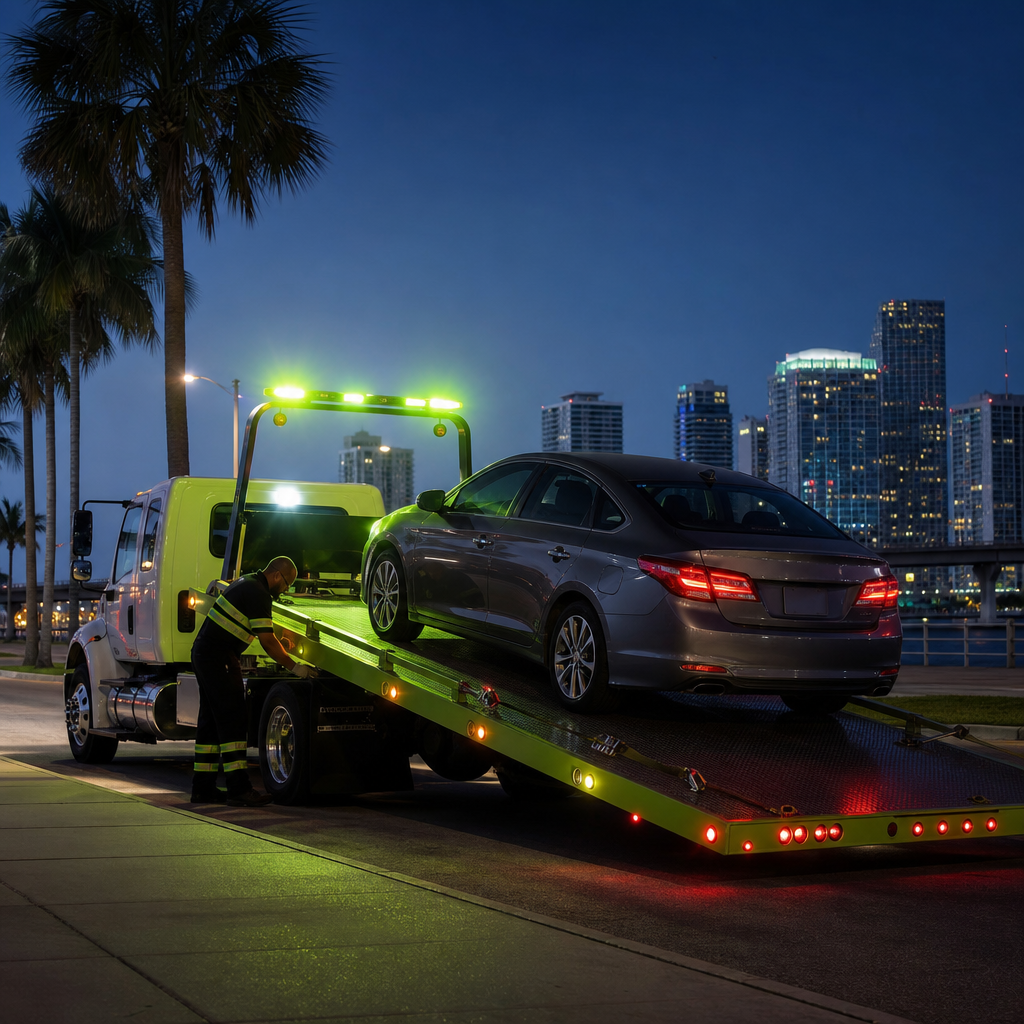
Request flatbed towing when driving could worsen existing damage or when any wheel should not remain on the road during transport. A flatbed carries the vehicle with all four wheels off the pavement, making it the better choice for visible wheel or suspension damage, serious steering problems, low ground clearance, water exposure, fluid loss, or a vehicle that cannot roll normally.
Driving may be reasonable only when the vehicle steers, brakes, accelerates, and tracks normally; no tire or wheel is damaged; no fluid is escaping; and no warning, sound, smell, or vibration suggests a developing problem. If you cannot confirm those points from a safe position, stop evaluating and request flatbed towing.
Do or don’t: compare the risk before moving
| What you observe | Do | Don’t |
|---|---|---|
| A tire is flat, separated, or off the rim | Request a flatbed if a safe, usable spare cannot be installed or other wheel damage is visible. | Do not drive on the damaged tire. A short distance can damage the wheel and reduce control. |
| A wheel leans, rubs, or sits differently from the others | Keep the vehicle stationary and explain the wheel position to the dispatcher. | Do not straighten the steering and “test it.” Suspension or steering parts may already be compromised. |
| Steering is unusually heavy, loose, or off-center | Stop as soon as a safe stopping place is available and arrange a tow. | Do not continue because the vehicle can still move. Movement is not proof of safe control. |
| Fluid is collecting beneath the vehicle | Note the location and apparent color without touching it, then report it when calling. | Do not assume the leak is harmless or restart repeatedly to see if it stops. |
| The vehicle stalled in standing water | Leave the engine off and tell the towing provider how high the water reached. | Do not keep attempting to restart it. Additional engine or electrical damage may result. |
| The underside scraped or struck an object | Use a flatbed when there is leaking, dragging material, unusual noise, or uncertain clearance. | Do not inspect beneath a vehicle on a roadside or unstable surface. |
| The car is all-wheel drive or has transport restrictions | Check the owner’s manual if it is readily available and give the exact vehicle details to the dispatcher. | Do not assume every vehicle can be towed with wheels rolling on the pavement. |
What to do, step by step
Secure the scene without creating another risk
Use the hazard lights and move out of an active travel path only if the vehicle can be moved safely. If steering, braking, a wheel, or a tire appears compromised, leave it where it is rather than forcing it farther. Choose a protected waiting position based on the traffic and surroundings; if exiting would put you closer to moving vehicles, remain belted and speak with the dispatcher.
Check only what is visible from a safe position
Walk around the vehicle only when you can do so away from traffic. Look for a tilted wheel, deflated tire, hanging panel, low corner, smoke, steam, or a spreading fluid spot. Do not touch hot components, reach near a wheel, or get under the vehicle.
Separate a drivability problem from a convenience problem
A locked car or discharged battery does not automatically require a tow. If the vehicle is otherwise undamaged, car lockout service or jump start service may solve the immediate problem. A flatbed becomes the stronger choice when the car cannot be operated safely after access or starting is restored.
Give the dispatcher information that affects loading
Have the following details ready:
- Your location in West Palm Beach or Palm Beach County and whether the vehicle is in a travel lane, shoulder, driveway, or parking area.
- Vehicle year, make, model, and whether it is front-wheel drive, rear-wheel drive, or all-wheel drive, if known.
- Which wheels roll and whether the steering can be turned.
- Any visible tire, wheel, suspension, underbody, or fluid issue.
- Whether the vehicle was in standing water, struck something, overheated, or stopped running.
- Low ground clearance, modifications, or loading obstacles that the operator should know about.
- Whether you have the keys and can place the transmission in neutral.
Ask for the method, not just “a tow”
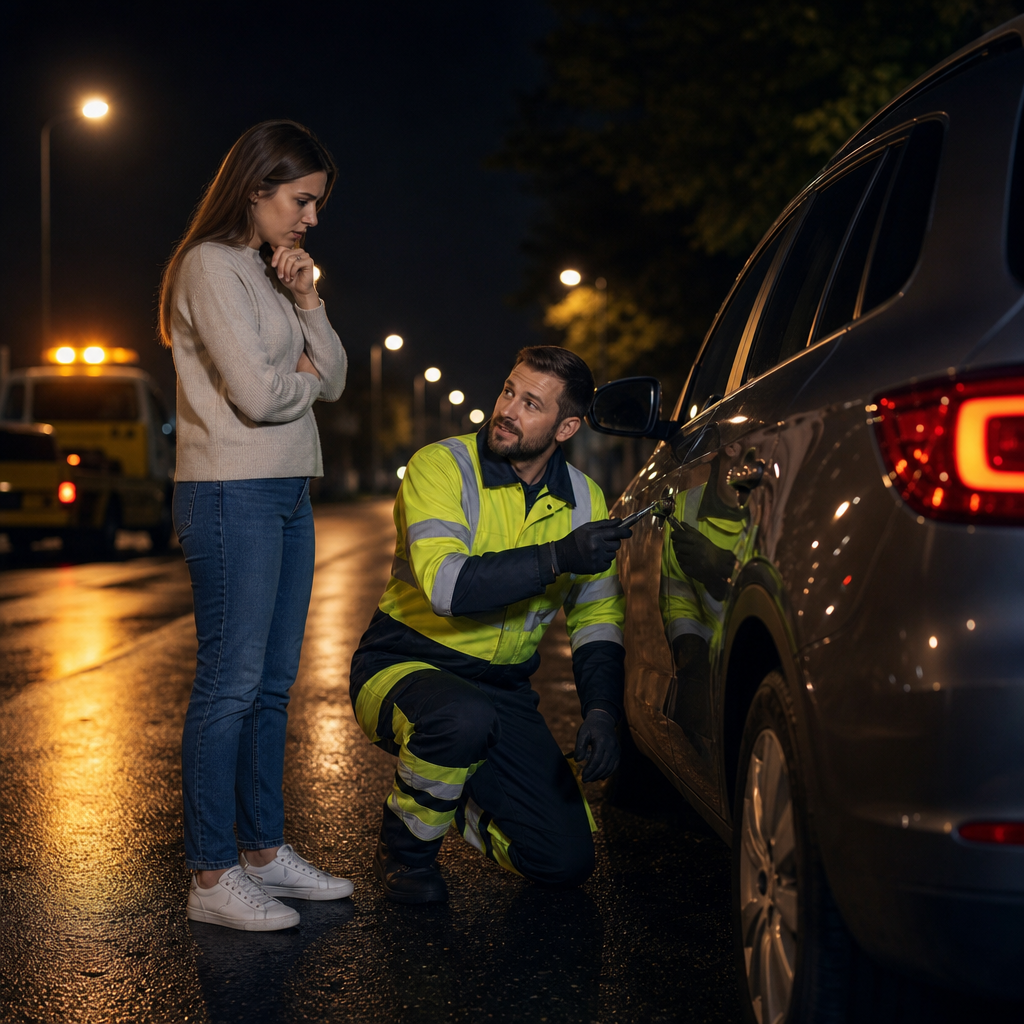
State that you are concerned about additional damage and ask whether a flatbed is appropriate for the condition described. The towing provider can match the equipment to the vehicle, its drivetrain, and its ability to roll. For an unsafe or disabled vehicle, contact emergency towing rather than attempting another test drive.
When to stop checking and call for help
Call immediately if the vehicle is obstructing traffic, you cannot inspect it without approaching moving vehicles, there is smoke or a strong burning odor, fluid is spreading, a wheel is displaced, the steering or brakes feel abnormal, or the vehicle stopped after entering water. Move yourself away from smoke or other immediate hazards when that can be done safely.
For an information-ready call, provide the vehicle details, exact condition, visible damage, wheel movement, ground clearance, and your surroundings. That allows 561 Towing West Palm Beach to evaluate whether a flatbed or another roadside service fits the situation without relying on guesswork.
Flatbed towing FAQs
Does all-wheel drive automatically require a flatbed?
Not in every circumstance, but many all-wheel-drive vehicles have restrictions on towing with wheels on the ground. A flatbed is often the simplest way to keep all wheels stationary. Give the dispatcher the exact year, make, and model, and consult the owner’s manual when accessible.
Can I drive a few blocks with a bent wheel or damaged tire?
That short trip can turn limited wheel or tire damage into a loss-of-control problem or additional suspension damage. If the wheel is bent, tilted, rubbing, or unable to hold air, do not drive it. Request a flatbed.
Is a warning light by itself enough reason to request a tow?
It depends on the warning and the vehicle’s behavior. Stop and request assistance if the light appears with overheating, loss of power, abnormal braking or steering, smoke, vibration, leaking fluid, or harsh noise. If the meaning is unclear, the owner’s manual and a towing dispatcher can help you choose the lower-risk response.
What if my vehicle runs but cannot be shifted into neutral?
Tell the dispatcher before the truck is sent. A vehicle that cannot roll freely may require specific loading equipment or procedures. Do not force the shifter, drag the vehicle, or attempt to release components you cannot access safely.