A vehicle that will not start can turn an ordinary stop into a stressful situation quickly—especially when you are parked in a busy lot, near a major roadway, or trying to get home before a South Florida rainstorm. The good news is that many no-start situations have a simple cause, such as a weak battery, loose connection, key issue, or drained electrical system.
This guide is designed to help West Palm Beach drivers make safe decisions first, identify common symptoms, and know when roadside assistance or towing is the better next step.
First: Do These Four Things
- Get to a safe location if possible. If the vehicle is already stopped, turn on hazard lights. Avoid trying repeated starts while positioned in traffic.
- Put the vehicle in park. For manual transmissions, make sure the shifter is fully in neutral and the clutch is pressed.
- Try one calm restart. Turn off headlights, climate controls, chargers, and other accessories. Then try starting once more.
- Do not keep cranking. Repeated unsuccessful attempts can drain a weak battery further and may leave you without enough power for lights or hazard flashers.
Start With the Symptom You Notice
The sound and dashboard behavior can help narrow down what to do next. You do not need to diagnose the vehicle completely on the roadside; the goal is to decide whether a jump start, lockout help, or a tow is appropriate.
The engine clicks but does not crank
Rapid clicking, a single click, dim interior lights, or a dashboard that flickers often points to low battery power or a battery connection issue. Heat can be hard on vehicle batteries, and a battery that seemed fine recently may still lose enough charge to prevent starting.
Before requesting a jump, check for obvious signs that make attempting one inappropriate. Do not touch the battery if you see leaking fluid, significant corrosion, a cracked battery case, smoke, or a swollen battery. Keep clear and arrange assistance instead.
The engine cranks normally but will not run
If the engine turns over with its usual sound but never starts, the problem may not be a simple dead battery. Check that there is fuel in the tank and make sure you are using the correct key or key fob. If a warning light remains on, the vehicle stalls immediately, or several start attempts fail, towing may be the safest way to avoid being stranded farther from home.
Nothing happens when you turn the key or press Start
First, make sure the brake pedal is firmly pressed for push-button-start vehicles. Confirm the shifter is completely in Park; moving it to Neutral and trying again can sometimes help identify a shifter-position issue. If you have a key fob, hold it close to the start button or use the manufacturer’s backup starting method if you know it.
If there are no lights, no sound, and no response after these simple checks, roadside help is usually more useful than continuing to try.
The car starts, then dies or loses electrical power
A vehicle that starts briefly and then stalls, loses dashboard power, or shows battery-related warnings should not be relied on for a long drive. Even if it restarts after a jump, it may shut down again at the next stop. Consider arranging a tow rather than risking a breakdown on a busy route.
A Safe Battery and Jump-Start Checklist
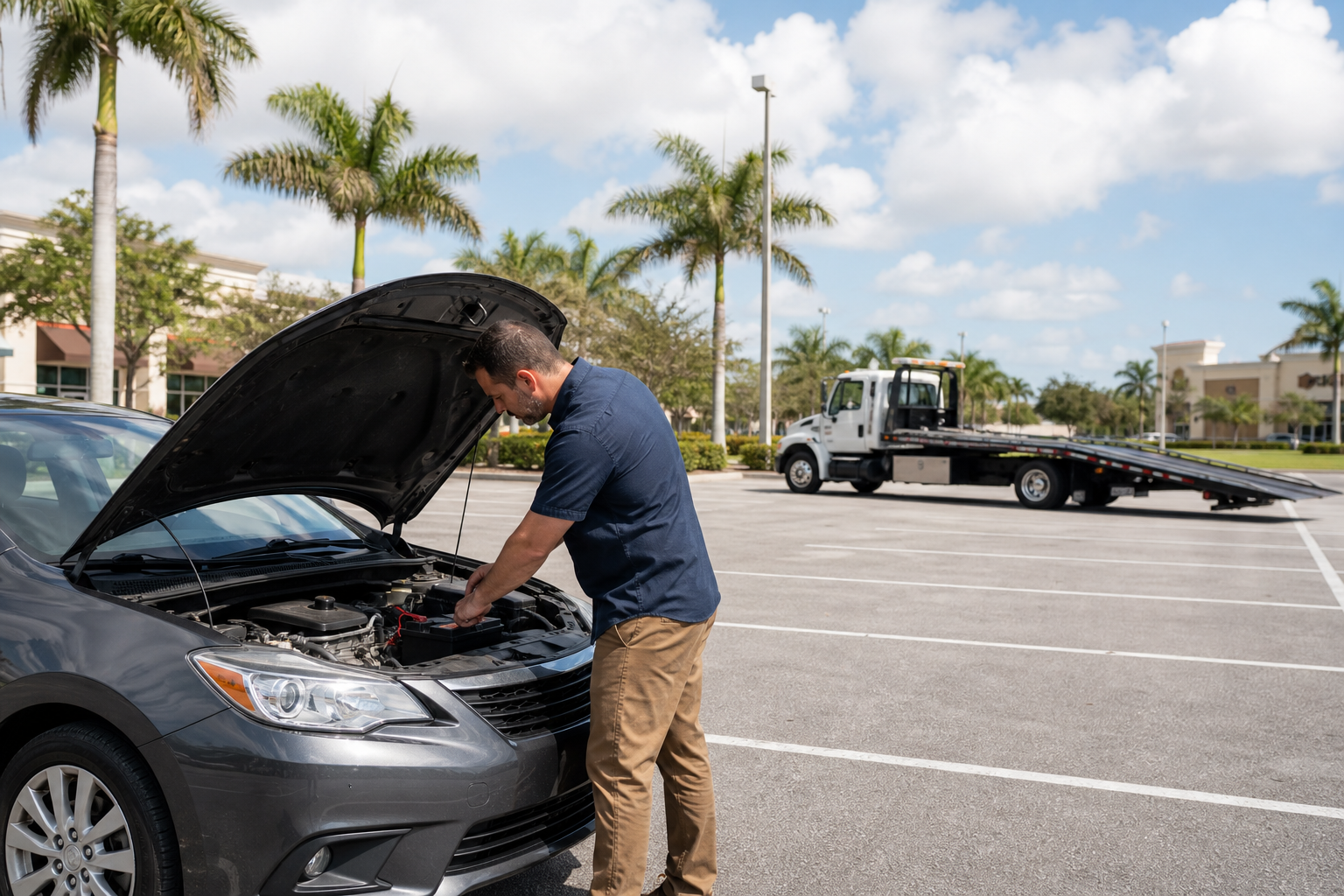
A jump start can be helpful when the battery is merely discharged, but it should be done carefully. If you do not have proper equipment, are unsure where the battery terminals are, or are parked in an unsafe location, request professional jump-start assistance.
- Park both vehicles away from moving traffic and do not allow them to touch.
- Set parking brakes and switch off lights, radios, and climate controls.
- Look for damaged cables, leaking battery fluid, smoke, or a swollen battery. Stop if you see any of these conditions.
- Use jumper cables only if you understand the connection points specified for your vehicle.
- Keep metal tools, jewelry, and loose clothing away from the battery area.
- After a successful start, do not assume the issue is solved. If the vehicle struggles, warning lights remain on, or it dies again, request towing.
For a driver who needs help at the vehicle, jump-start service can provide a safer option than relying on an unfamiliar passerby or attempting connections in a cramped parking space.
Where You Are Matters in West Palm Beach
West Palm Beach has busy corridors, large retail areas, downtown streets, garage entrances, and high-speed roads nearby. A car that will not start is easier to manage in a marked parking space than on a shoulder or at the edge of an active travel lane.
If you are near a high-traffic area, focus on visibility and personal safety rather than troubleshooting under the hood. Turn on hazard lights if they work, remain away from traffic, and avoid standing between your vehicle and moving vehicles. If you are in a parking garage, note the garage name, level, section, and clearance restrictions when you request assistance. Those details can affect what equipment can reach your vehicle.
During heavy rain, avoid opening electrical components unnecessarily or standing near pooled water. If conditions feel unsafe, wait in a protected location when possible and arrange help.
Do Not Overlook a Lockout or Key Problem
Sometimes a no-start situation is actually an access or key issue. You may have a dead key-fob battery, a key that is not being recognized, or keys locked inside the vehicle. Check whether you have a spare key available and whether your vehicle has a known emergency-start procedure.
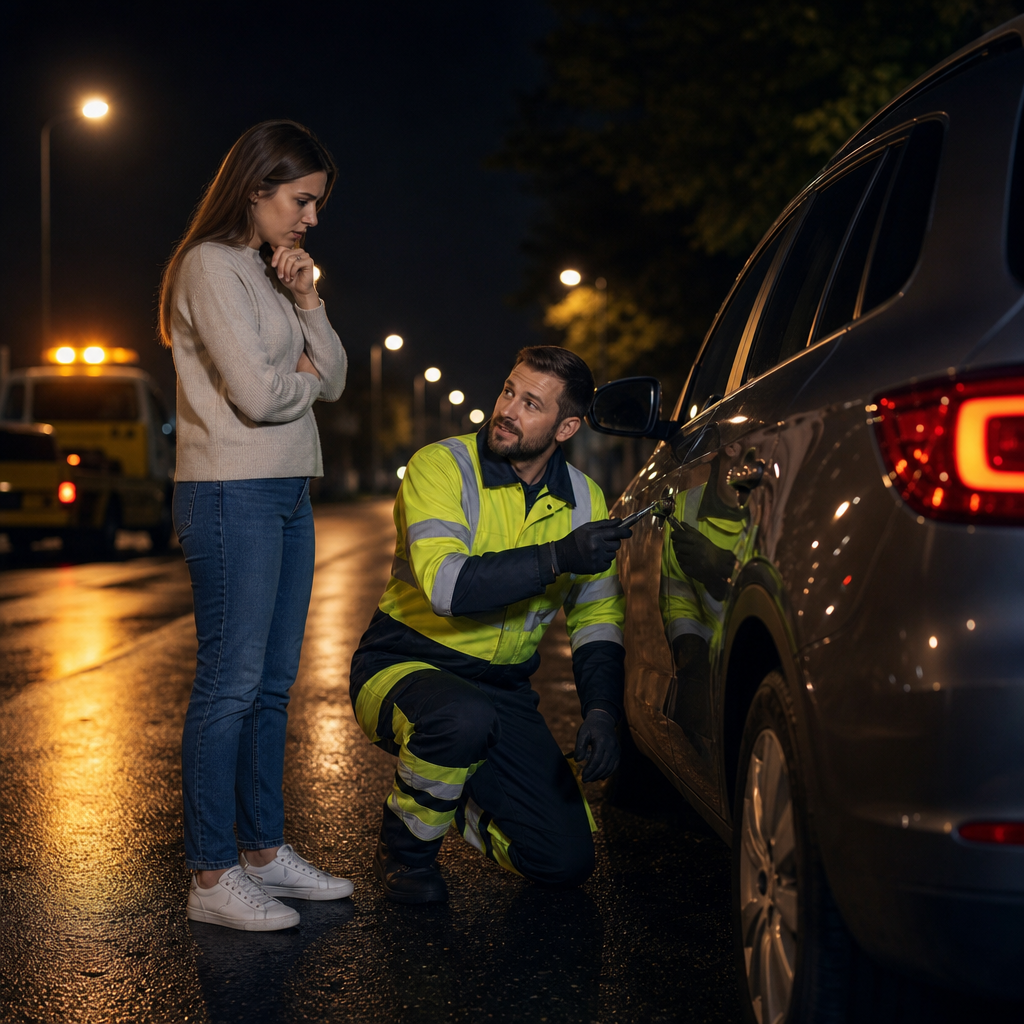
Do not force a door, pry a window, or use improvised tools to reach locked keys. That can damage weather seals, glass, locks, and side-curtain airbag areas. If the keys are inaccessible, car lockout service is the appropriate next step.
When a Jump Start Is Reasonable—and When It Is Not
| Situation | Best Next Move |
|---|---|
| Dim lights, clicking sound, no visible battery damage | A professional jump start may be reasonable. |
| Vehicle starts after a jump but stalls, loses power, or shows persistent warnings | Arrange towing rather than depending on the vehicle for another trip. |
| Engine cranks but will not start after basic checks | Request towing to avoid repeated failed attempts. |
| Vehicle is blocking traffic, positioned unsafely, or stranded after dark | Prioritize emergency roadside assistance or towing. |
| Battery is leaking, swollen, smoking, or badly damaged | Do not jump-start it; keep clear and request help. |
When to Call for Towing Help
Call for towing when the cause is unclear, the vehicle will not remain running, or attempting a jump is not safe. A tow is also a sensible choice when you are stranded at a location where you cannot safely wait or troubleshoot.
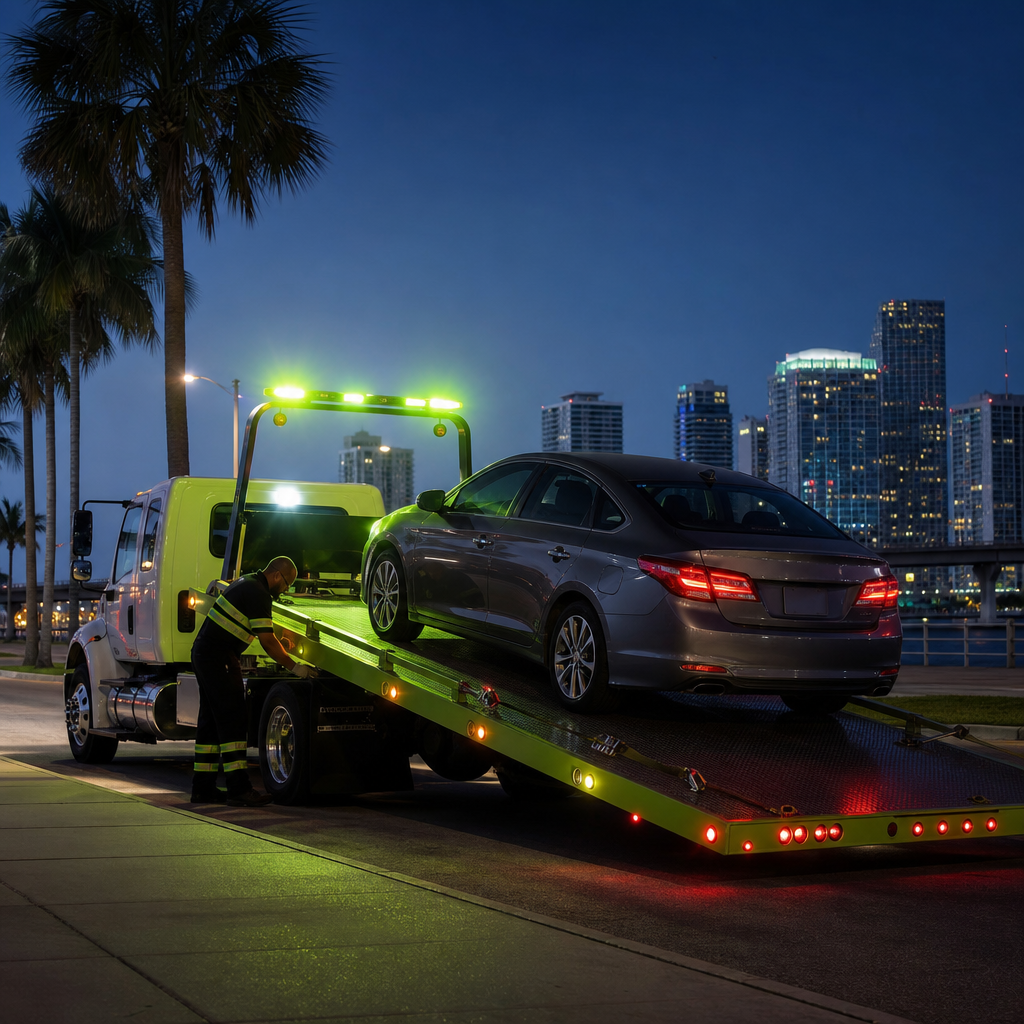
Flatbed transport can be especially useful when you prefer to keep all four wheels off the road during transport. You can request flatbed towing when arranging service. For general situations where the vehicle cannot be started or driven safely, emergency towing help can move it to a destination you choose.
Information to Have Ready When You Call
Clear details help roadside providers locate you and send appropriate equipment. Before calling, gather what you can:
- Your exact location, including the street address, business name, parking-lot section, or garage level.
- Vehicle year, make, model, color, and license plate if available.
- What happens when you try to start it: clicks, no power, cranks without starting, or starts and dies.
- Whether the vehicle is in a safe parking spot, blocking an exit, or near active traffic.
- Whether you need a jump start, lockout assistance, towing, or are unsure.
- Your intended destination if towing is needed.
Frequently Asked Questions
How can I tell if my car battery is dead?
Common signs include rapid clicking when starting, dim headlights or cabin lights, slow cranking, and dashboard lights that flicker or disappear. These signs can also occur with connection or charging-system problems, so a successful jump does not always mean the battery was the only issue.
Should I keep trying to start my car?
No. One additional attempt after turning off accessories is reasonable, but repeated cranking can drain the battery further. If the vehicle does not start, shift your attention to safety and getting appropriate assistance.
Can I drive after receiving a jump start?
Only if the vehicle starts normally and continues running without obvious warning signs. If it stalls, power drops, warning lights remain on, or it seems unreliable, arrange a tow instead of risking another roadside stop.
What if my vehicle will not start in a parking garage?
Tell the assistance provider the garage name, level, section, entry instructions, and any posted clearance information. If the garage has limited overhead clearance, a standard tow vehicle may not be able to access every level.
What should I do if I am stranded on a busy road?
Use hazard lights if available, stay away from traffic, and avoid working under the hood near moving vehicles. If your location feels unsafe, contact emergency services as appropriate and arrange roadside or towing help when it is safe to do so.