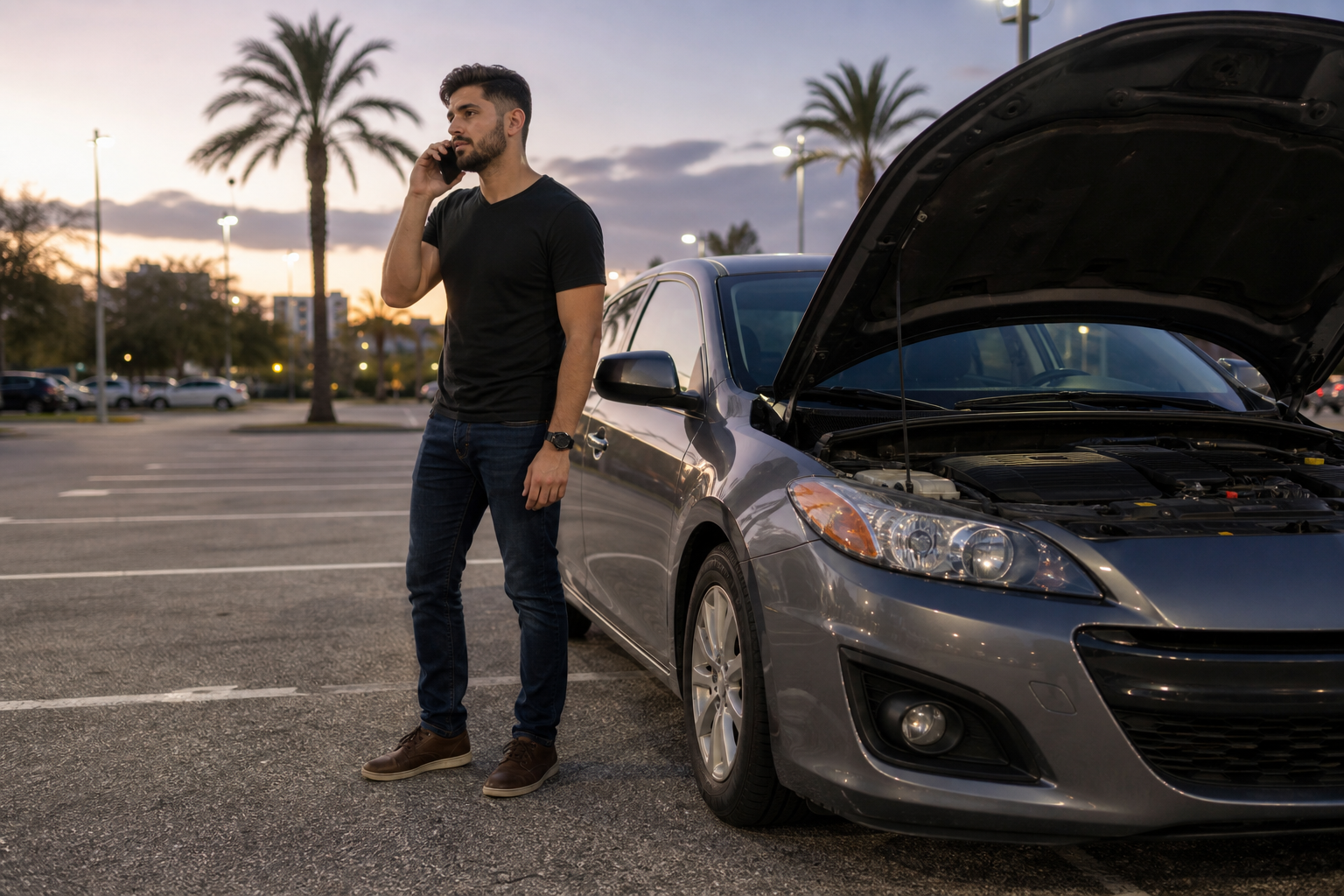
A car that will not start can turn an ordinary stop into an urgent problem—especially in West Palm Beach heat, a sudden summer downpour, or a busy travel corridor. The most useful next step is not always trying the ignition again. First, make the location safe, notice what the vehicle is doing, and decide whether a jump start is appropriate or whether roadside help is the safer choice.
First 5 Minutes: Protect Yourself and Your Vehicle
- Put the vehicle in park, set the parking brake, and turn on hazard lights if they work.
- If you are in a safe parking area, stay aware of traffic, people, and weather while you assess the problem.
- If the vehicle is stopped on a high-speed roadway, narrow shoulder, bridge, ramp, or active lane, do not attempt a jump start beside traffic.
- Call for roadside assistance or towing if the location is unsafe, the vehicle is blocking traffic, or you are unsure what is wrong.
- Keep your phone charged when possible and share your exact location, direction of travel, nearby cross street, or landmark with the dispatcher.
Start With Safety, Not Diagnostics
Where the car stopped matters as much as why it will not start. A vehicle in a residential driveway or shopping-center parking lot gives you time to check simple signs. A vehicle on I-95, the Florida Turnpike, a high-speed ramp, or a narrow roadside does not.
On limited-access roads, move as far from traffic as possible only if the vehicle can be moved safely. If you can reach a safe area behind a barrier, do so. If you are already on a narrow shoulder with fast traffic nearby, stay clear of the traffic side of the vehicle and avoid opening the hood or handling jumper cables. Request help instead. If there is an immediate danger, such as a vehicle stopped in a travel lane, a collision risk, smoke, or severe weather exposure, contact emergency services first.
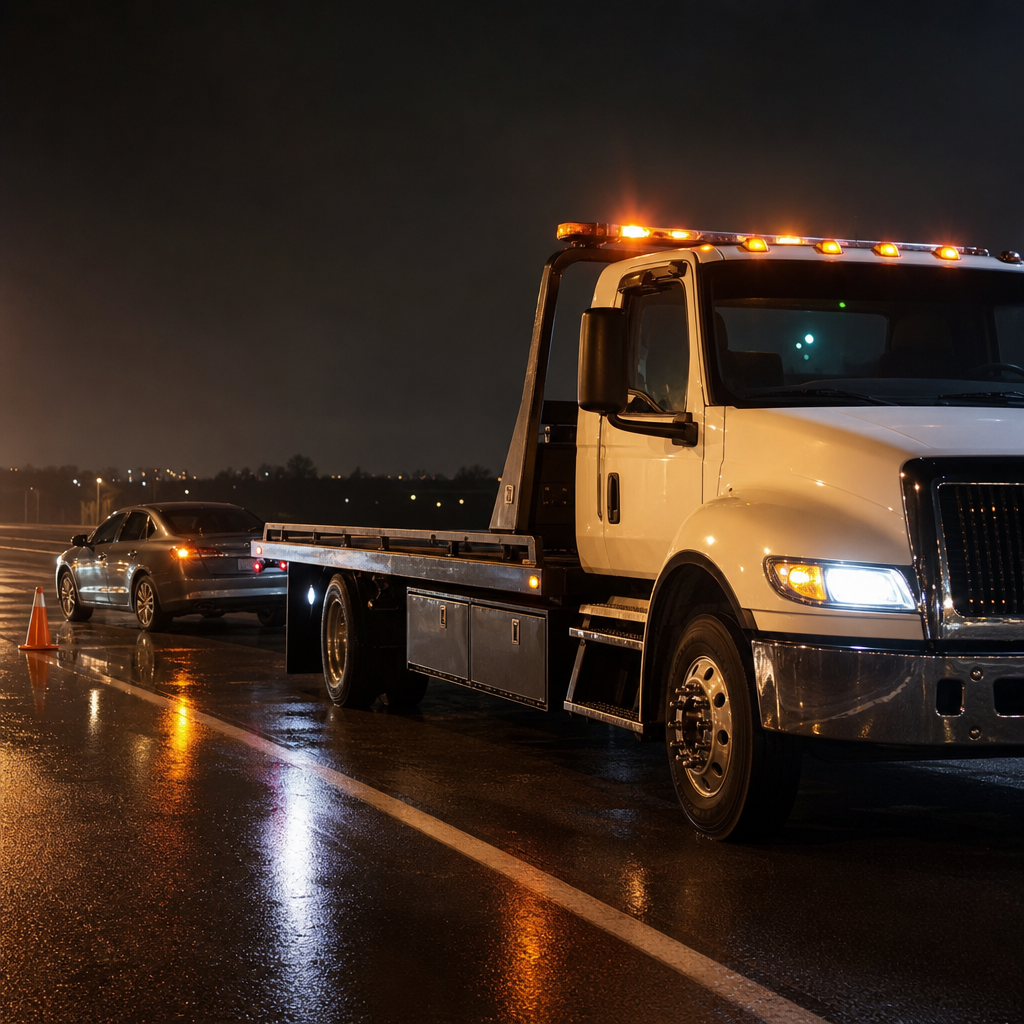
West Palm Beach weather can make a breakdown more difficult. Summer heat places extra strain on batteries, while heavy rain, lightning, and flooded pavement can make roadside work unsafe. Do not stand outside during lightning or attempt to connect cables in standing water. A professional roadside response or a tow to a safer location is often the better decision.
What Your Car Is Telling You
You do not need to diagnose the vehicle perfectly before asking for help. A few details can help you choose the right service and describe the issue clearly.
Signs that point to a weak or discharged battery
- The engine cranks slowly, struggles, or makes a rapid clicking sound.
- Dashboard lights are dim, flickering, or absent.
- The interior lights, headlights, radio, or power locks are weak or do not work.
- The vehicle was recently parked for an extended period, or a light or accessory may have been left on.
- The car starts after a jump but later has trouble starting again.
High temperatures can shorten battery life over time, so a battery that seemed fine earlier in the year may fail with little warning during a hot South Florida day. Still, a no-start condition can have other causes. If the engine cranks normally but will not fire, if warning lights appeared while driving, or if you smell burning or see smoke, do not assume a jump start will solve it.
Details to note before you call
- Does the engine crank, click, or remain completely silent?
- Do the dashboard and exterior lights come on?
- Is the key fob working, or is there a key or ignition warning on the dash?
- Did the vehicle stop after being driven, or did it fail to start after parking?
- Are you in a parking space, driveway, garage, roadside shoulder, or travel lane?
These observations can help determine whether jump-start service may be suitable or whether emergency towing is the more practical option.
Before You Try a Jump Start
A jump start can be helpful when the battery is discharged and the vehicle is in a safe place. It is not a good roadside task in hazardous traffic conditions, heavy rain, standing water, or near smoke, leaking fluids, damaged cables, or a swollen battery case.
Check the owner’s manual before connecting anything. Many newer vehicles have designated jump terminals under the hood instead of direct battery access. Some also use battery-management systems that require specific procedures. Connecting cables to the wrong points can damage electrical components or create a safety risk.
If you have a portable jump pack or another vehicle available, only proceed if you know the manufacturer-approved connection points and the area is safe. Keep metal tools, jewelry, and loose cable clamps away from moving parts and battery terminals. Never improvise with damaged jumper cables, and do not keep repeated attempts going if the vehicle does not respond.
For many drivers, requesting a professional car jump start is simpler than finding cables, locating a second vehicle, and working through an unfamiliar under-hood layout. It also avoids asking a stranger for assistance in a parking lot or on the roadside.
When a Jump Start Is Not the Right Answer
Call for help rather than continuing to troubleshoot if any of the following applies:
- You are stopped where traffic is close or fast-moving, including I-95, Turnpike ramps, or a narrow shoulder.
- The car is in an unsafe position, blocking an entrance, lane, or intersection.
- There is smoke, a burning smell, visible battery damage, or signs of fluid leakage.
- The vehicle does not respond after a proper jump-start attempt.
- The engine starts but warning lights remain on, the car stalls, or it does not appear safe to drive.
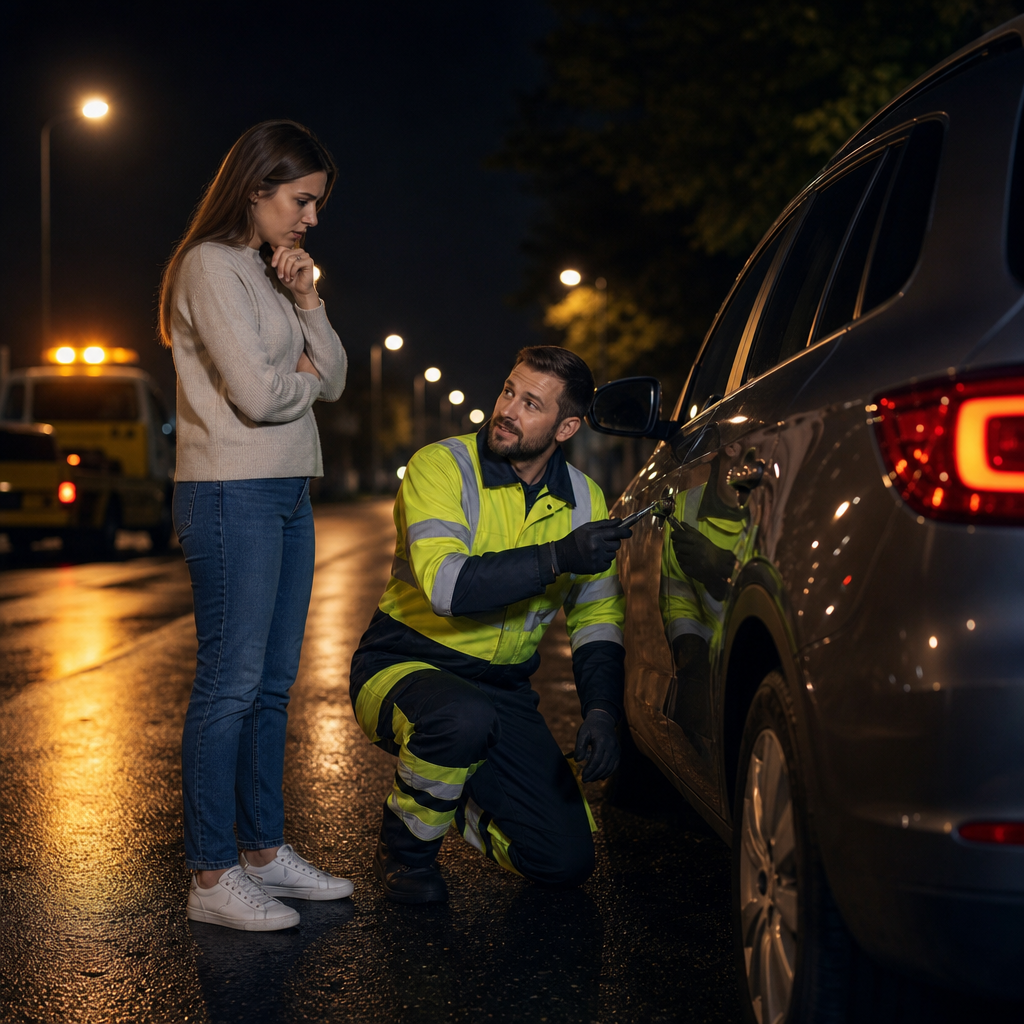
- You are locked out of the vehicle and cannot access the keys, hood release, or charging equipment.
- Severe rain, lightning, darkness, or personal safety concerns make waiting outside risky.
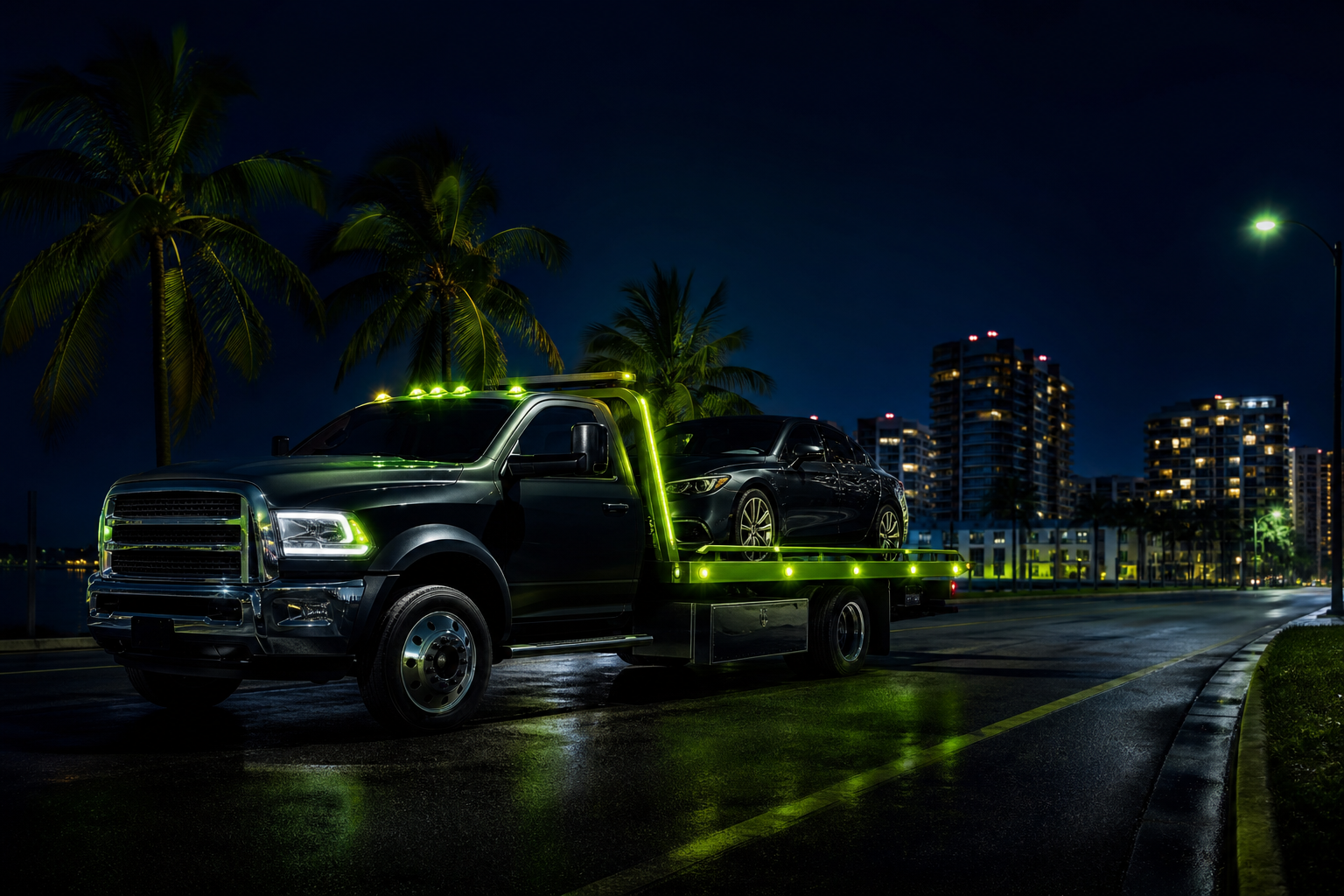
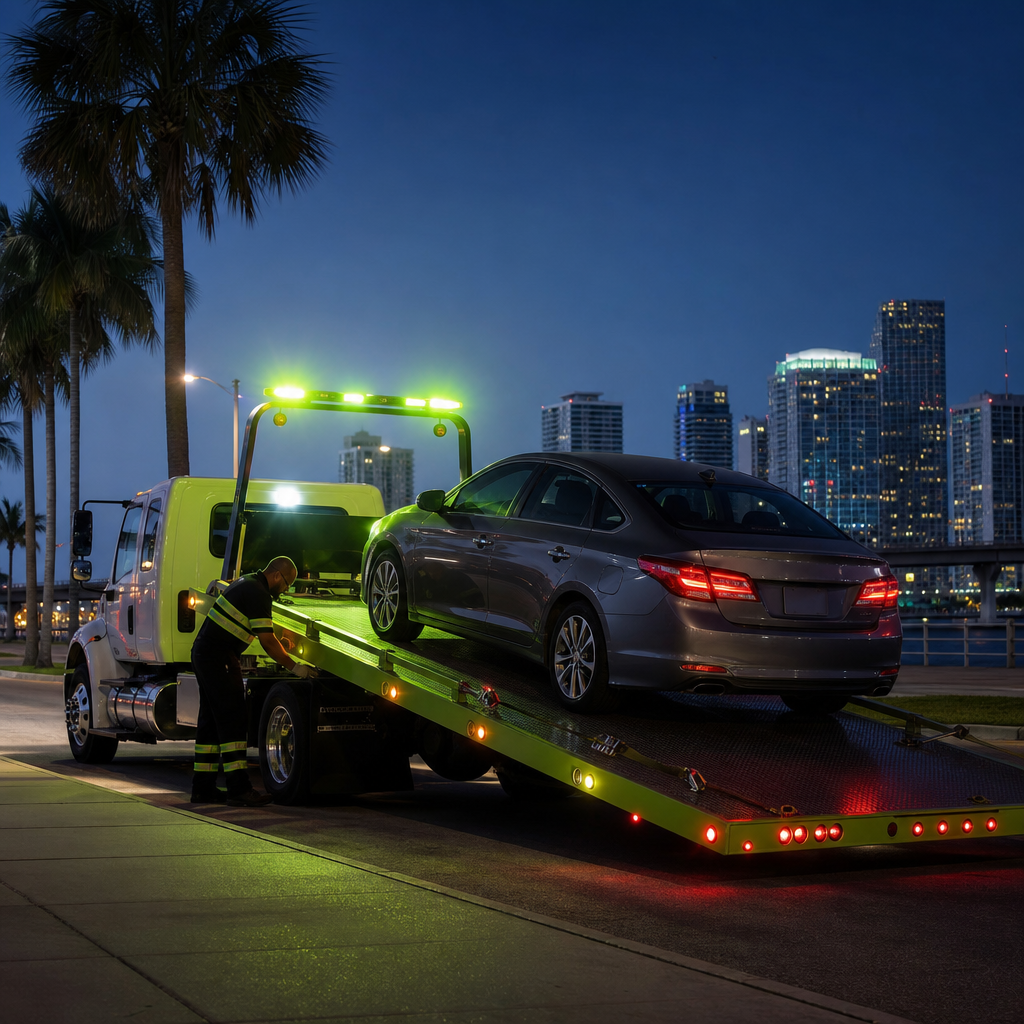
In these situations, the goal is to get the vehicle out of danger without creating a second problem. A flatbed towing service can be appropriate when the vehicle cannot be safely started or driven. If you are locked out, request car lockout service rather than trying to force a door, window, or lock.
A Practical Waiting Checklist for West Palm Beach Drivers
Once help is on the way, use the waiting time to make the pickup safer and smoother:
- Keep hazards on if the battery has enough power and doing so does not create another issue.
- Move passengers to a safer location away from traffic when it is safe to do so. On a busy roadway, avoid crossing traffic lanes.
- Have your vehicle make, model, color, and location ready.
- Use a nearby business name, mile marker, exit, cross street, or visible landmark to clarify your location.
- Tell the dispatcher whether the car is in a garage, parking deck, gated community, tight parking lot, or other access-restricted location.
- Remove valuables from sight and keep your keys, phone, identification, and essential medication with you.
- During intense heat, avoid waiting in direct sun if there is a safe shaded public area nearby. During thunderstorms, seek a safer enclosed location when possible.
After the Vehicle Starts
A successful jump start means the car has power at that moment; it does not confirm that the underlying issue is resolved. If the vehicle starts, assess whether it is operating normally before leaving the area. Watch for warning lights, unusual electrical behavior, repeated stalling, or another no-start after a brief stop.
If the vehicle starts but you are not confident it will remain reliable, do not gamble on driving through congested traffic or onto a high-speed road. Towing can be the safer option when a vehicle may stall again or leave you stranded in a worse location. For an immediate no-start situation in the West Palm Beach area, use a provider equipped for 24-hour towing and roadside assistance.
Frequently Asked Questions
My dashboard lights come on, but the car will not start. Is it still the battery?
It can be. A battery may have enough power for some lights but not enough to crank the engine. Clicking, slow cranking, dim lights, or electrical accessories acting weakly are common clues. Other issues can also cause a no-start, so do not rely on a jump start if the location is unsafe or the vehicle shows warning signs.
Should I try to jump-start my car on I-95?
No roadside battery work is recommended on a narrow shoulder or beside high-speed traffic. Prioritize getting to a protected area if possible, such as behind a barrier, and request assistance. If the car is creating an immediate traffic hazard or you feel unsafe, contact emergency services.
Can rain damage jumper cables or make a jump start dangerous?
Wet weather increases risk, especially around standing water, lightning, poor visibility, and slippery pavement. Do not attempt a jump start during lightning or when you cannot work safely around the vehicle. Call for roadside assistance instead.
Why did my car start with a jump but stop again later?
A jump start can temporarily restore enough power to start the engine, but it does not identify the reason the battery lost charge. If the problem returns, the vehicle may need to be transported rather than repeatedly jumped.
What information should I give a towing or roadside dispatcher?
Provide your exact West Palm Beach location, the safest nearby landmark or cross street, your vehicle description, whether it cranks or clicks, and whether you need a jump start, lockout assistance, or towing. Also mention access issues such as a parking garage, gated entrance, or a vehicle positioned in an unsafe roadside location.